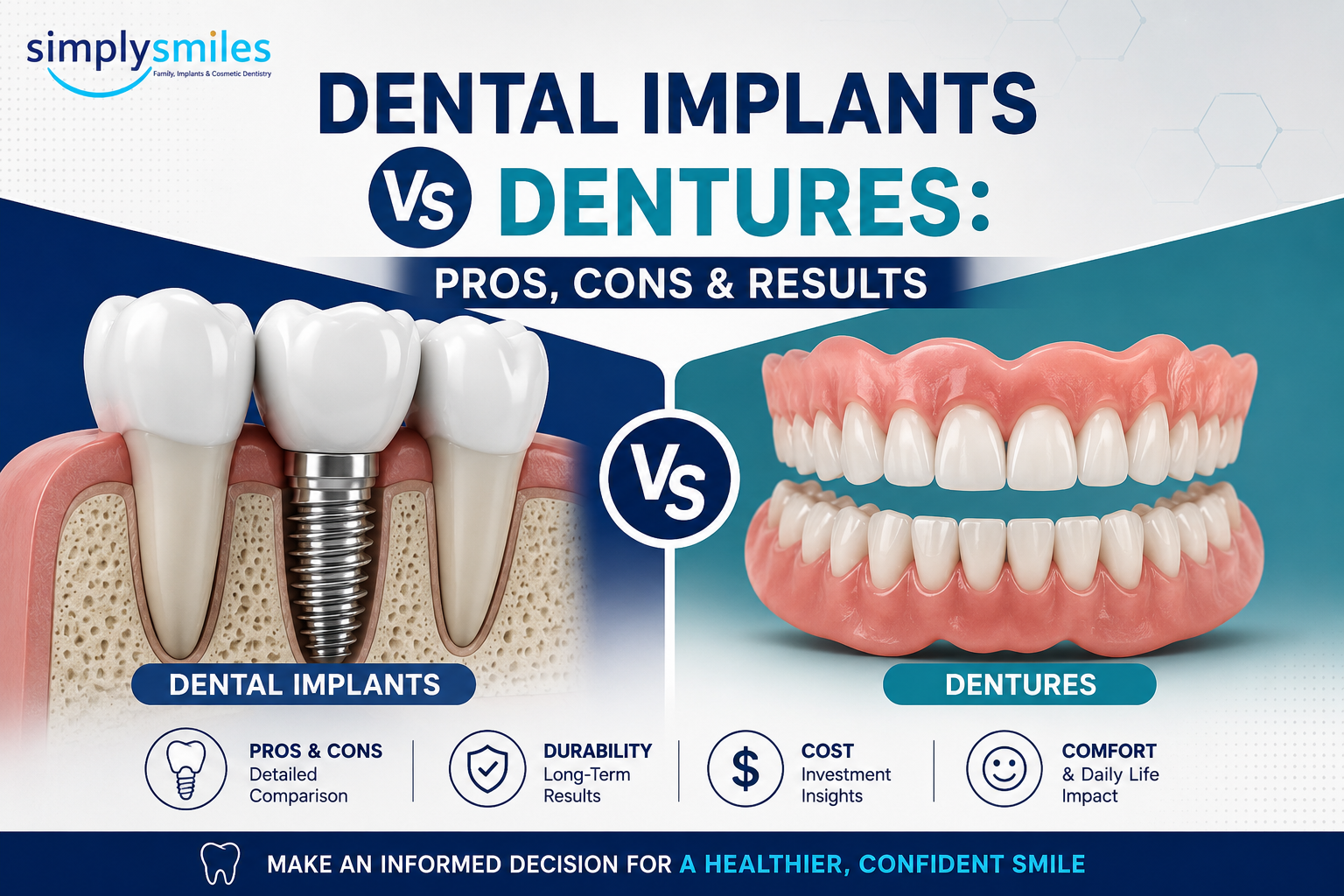
Losing one or more teeth can make everyday life tougher. It may be tougher to eat or speak clearly and smile with sureness. The good news is that there are actual ways to change missing teeth. When comparing dental implants vs dentures, then it’s important to understand how each option works and what it offers. Dental implants are a long-term solution that look and feel like natural teeth. Dentures are a more reasonable option for changing several missing teeth. This guide clarifies the benefits or drawbacks, costs and outcomes of equal treatments to help you make the right choice for your smile.
If you’re looking for personalized treatment recommendations, our experienced Glendale dentist can help you choose the best tooth replacement option based on your oral health and long-term goals.
What Are Dental Implants?
Dental implants are a durable and popular way to replace missing teeth. They look and feel like actual teeth, so you can eat or talk and smile more easily. If you take good care of them, then they can last for many years. A dental implant is a minor metal post that’s typically made of titanium which placed into your Jawbone. It acts like root of a natural tooth. Over time, the bone grows around the implant and holds it firmly in place. According to the American Dental Association (ADA), dental implants are a predictable and effective option for replacing missing teeth when recommended by a qualified dentist. Later it heals, a custom-made crown, bridge or denture is attached to the implant.
Best for:
- Changing one or more missing teeth
- People with healthy gums
- People who have enough Jawbone to support an implant
- Anybody who needs a long-lasting tooth replacement
Dental implants definitely stay in place and don’t move like removable dentures. They also help keep your Jawbone strong and offer your smile a natural look.Learn more about our dental Implant treatments and discover how implants can restore both function and confidence with a long-lasting solution.
What Are Dentures?
Dentures are detachable false teeth that replace missing teeth. They are made to fit your mouth easily and help you eat or speak and smile more easily. Dentures also support your cheeks and lips which helping your face have its natural shape after tooth loss.
Types of dentures include:
Full dentures: Change all the teeth in the upper jaw, lower jaw or both.
Partial dentures: Replace a limited number of missing teeth while your natural teeth stay in place.
Implant-supported dentures: Attach to dental implants for a stronger or safer fit.
Immediate dentures: placed immediately after a tooth is removed, so you don’t have to go without teeth.
You can remove traditional dentures for cleaning and while sleeping. With good care and consistent dental visits, then dentures can last for various years and help you enjoy normal activities with more comfort and sureness.If you’re considering removable tooth replacement, explore our custom dentures to learn which option may be right for your smile.
Dental Implants vs Dentures: Quick Comparison
| Feature | Dental Implants | Dentures |
| How they stay in place | Fixed in the jaw | Can be detached |
| Looks | Looks and feels like actual teeth | Looks natural but may become loose over time |
| Comfort | Feels like natural teeth | May take time to get used to |
| Stays in place | Very durable and safe | Can move while eating or talking |
| Jawbone health | Helps have the jawbone strong | Doesn’t stop the jawbone from shrinking |
| Cleaning | Brush and floss like natural teeth | Remove and clean each day |
| How long they last | Can last 20 years or more with good care | Typically lasts 5–10 years previously replacement |
| Cost | Prices more at first | Costs less at first |
Factors to Consider Before Choosing Dental Implants or Dentures
Choosing between dental implants and dentures depends on more than just replacing missing teeth. Every patient has different oral health needs, lifestyle preferences, and long-term goals. Taking time to evaluate these factors can help you make a more informed decision.
Before selecting a treatment, consider:
- Your overall oral health and gum condition
- The amount of healthy jawbone available
- Your budget and long-term investment
- Whether you prefer a removable or permanent solution
- Your daily oral hygiene routine
- Existing medical conditions that may affect healing
- Your dentist’s professional recommendation
A personalized dental consultation is the best way to determine which tooth replacement option is right for your smile.
Pros of Dental Implants
Dental implants are a common way to replace missing teeth. They look and work like actual teeth. They can benefit your smile, eating and speaking with more sureness.
Natural Look: Dental implants are made to match your natural teeth in shape or size and colour. They blend in with your smile.
Easy to Eat: As implants are fixed in your jaw then they stay in place. This makes it easier to eat many of your preferred foods.
Last a Long Time: With proper care and regular dental checkups then dental implants can last for many years.
Help Keep the Jawbone Strong: Dental implants support the Jawbone. It helps reduce bone loss that can occur later, such as after losing a tooth.
Stay Firm: Not like dentures, dental implants don’t slip or move while you eat, talk or laugh.
Easy to Clean: You care for dental implants just like your natural teeth. Brush or floss and visit your dentist habitually.
Dental implants are a strong or comfy and long-lasting way to replace the missing teeth. They look natural or stay in place and help have your mouth healthy. Healthy gums play an important role in the long-term success of dental implants. Learn how to prevent gum disease before it gets serious to protect your smile.
Cons of Dental Implants
Dental implants have many paybacks but they also have some disadvantages. It’s important to know these beforehand when making your decision. Your dentist can help you select the best option for your smile and oral health.
Higher Cost: Dental implants typically cost more than dentures as they require surgery or custom-made teeth and several dental appointments.
Surgery Needed: Getting dental implants requires a small surgery. It’s harmless for most people but it may not be the right option for everybody.
Takes More Time: The treatment can take a limited number of months because the implant needs time to settle and become strong in the Jawbone.
Healthy Jawbone Needed: If you have lost too much Jawbone then you may want a bone graft before getting dental implants.
Even though dental implants cost more and take longer, many people pick them because they are durable or comfortable and look and feel like natural teeth.
Pros of Dentures
Dentures are a simple and reasonable way to replace missing teeth. They can help you eat, speak and smile well. Many people choose dentures because they are easy to obtain and don’t require surgery.
Lower Cost: Dentures cost less than dental implants which making them a good option for many people.
No Surgery Needed: Traditional dentures don’t require surgery which making treatment easier and quicker.
Quick Treatment: Most people get their dentures in a few weeks after taking dental impressions.
Replace Many Teeth: Dentures can replace several missing teeth or a full set.
Easy to Fix: If dentures break or become loose then they are typically easy and less costly to repair.
Dentures are a good choice for people who want a reasonable way to replace missing teeth. With correct care and consistent dental visits then they can last for years and help you smile with sureness.
Cons of Dentures
Dentures are a common way to replace missing teeth but they too have some disadvantages. They may not feel as natural as implants and want regular care. Understanding to these problems can help you select the correct option.
May Move While Eating: Dentures can become loose and may move when you eat or talk.
Low Chewing Power: They don’t work as strongly as natural teeth.
Bone Loss Happens: Dentures do not support the Jawbone so that bone loss can continue.
Need Regular Changes: They may want adjustments or replacement over time.
Must Be Removed Daily: Dentures should be taken out for cleaning and kept in water overnight.
Even with these problems then dentures remain an inexpensive and useful option for replacing missing teeth.
Dental Implants vs Dentures Cost Comparison
Cost is one of the biggest factors when choosing between dental implants and dentures. While dentures usually require a lower initial investment, dental implants often provide greater long-term value because they are designed to last for many years with proper care.
| Feature | Dental Implants | Dentures |
| Initial Cost | Higher | Lower |
| Long-Term Value | Excellent | Good |
| Replacement Frequency | Rare | Every 5–10 Years |
| Maintenance Costs | Low | Moderate |
| Durability | 20+ Years | 5–10 Years |
Although implants require a larger upfront investment, many patients choose them because of their stability, durability, and natural appearance.
Who Is a Good Candidate for Dental Implants?
The dental implants are a good option for people with healthy gums and enough Jawbone to hold the implant. A person should not smoke too much or try to discontinue smoking. Good brushing and cleaning of teeth are too important. They should need a long-lasting solution for missing teeth and be okay with a small surgery. Being in good overall health and visiting the dentist habitually can help make the treatment more successful and long-lasting.If you’re already experiencing ongoing dental issues, understanding the common dental problems we see in Glendale patients can help you determine whether implant treatment is right for you.
Who Is a Good Candidate for Dentures?
Dentures are a good choice for people with many missing teeth who want to easily improve their smile. They are supportive of those who don’t need surgery or a fast treatment. The dentures also work well for people who have a weak Jawbone or can’t get dental implants. They are an inexpensive and simple solution for replacing teeth. Dentures help recover chewing or speaking and the look of your smile which making everyday life more comfortable.
How to Care for Dental Implants and Dentures
No matter which treatment you choose, proper oral care is essential for maintaining a healthy smile and extending the life of your tooth replacement.
Caring for Dental Implants
- Brush twice every day.
- Floss around the implant daily.
- Visit your dentist for regular checkups.
- Avoid using your teeth to open hard objects.
- Maintain healthy gums to protect the implant.
Caring for Dentures
- Remove dentures every night before sleeping.
- Clean them daily using a denture brush.
- Store dentures in water or a denture solution.
- Visit your dentist for adjustments if they become loose.
- Keep your gums and remaining natural teeth clean.
Good oral hygiene helps both dental implants and dentures remain comfortable, functional, and long-lasting. Following healthy daily habits can also reduce your risk of future dental problems. Read our guide on oral health tips every Glendale dentist recommends for practical advice.
Which Option Gives Better Long-Term Results?
Equally, dental implants and dentures help you chew and speak better but they work in different ways. Implants are fixed in the jaw and feel strong like natural teeth. They also help keep your Jawbone healthy. Dentures are detachable and a cheaper or faster option for replacing missing teeth. They are easy to adjust. With good care, they last equally long but implants are typically stronger or more comfortable and better for long-term oral health.
Why a Professional Dental Consultation Matters
Although comparing dental implants and dentures online is helpful, every smile is unique. A comprehensive dental examination allows your dentist to evaluate your oral health, discuss your goals, and recommend the most suitable treatment based on your individual needs.
During your consultation, your dentist may evaluate:
- The condition of your gums
- Jawbone strength and density
- Number of missing teeth
- Bite alignment
- Overall oral health
- Your long-term treatment goals
Receiving professional guidance helps ensure you choose the solution that provides the best comfort, function, and long-term results.
Restore Your Smile with Confidence
Whether you’re considering dental implants or dentures, choosing the right treatment starts with expert guidance. Our experienced dental team is here to answer your questions, evaluate your oral health, and recommend the best tooth replacement option for your needs. Schedule your consultation today and take the next step toward a healthier, more confident smile.
Final Thoughts
To summarize that picking between dental implants vs dentures depends on your desires or teeth health and budget. The dental implants are durable or long-lasting and feel like the real teeth. They help you eat and speak well with good support. The dentures are cheaper and don’t need surgery. They can still help you smile and chew food. Equally, the choices can improve your sureness and daily life. You should visit to a dentist for a correct checkup and guidance before deciding. You should schedule a consultation with an experienced dentist in Glendale, AZ with Simply Smile Arrowhead who can evaluate your oral health and recommend the most appropriate treatment for your needs.No matter which option you select then replacing missing teeth is key to better oral health or comfort.
Frequently Asked Questions
Are dental implants better than dentures?
The dental implants are typically more stable which help you chew better and last for long time. Dentures are still a good option as they cost less and don’t require surgery.
Do dentures hurt more than implants?
Dentures may feel a little uncomfortable at first, while you get used to them. Implants may have some discomfort after surgery but when healed then they feel the like natural teeth.
Can dentures be replaced with implants later?
Yes, many people start with dentures and later switch to dental implants if they are appropriate.
Which lasts longer?
The dental implants can last 20 years or more with good care. The dentures typically need to be changed after 5 to 10 years.