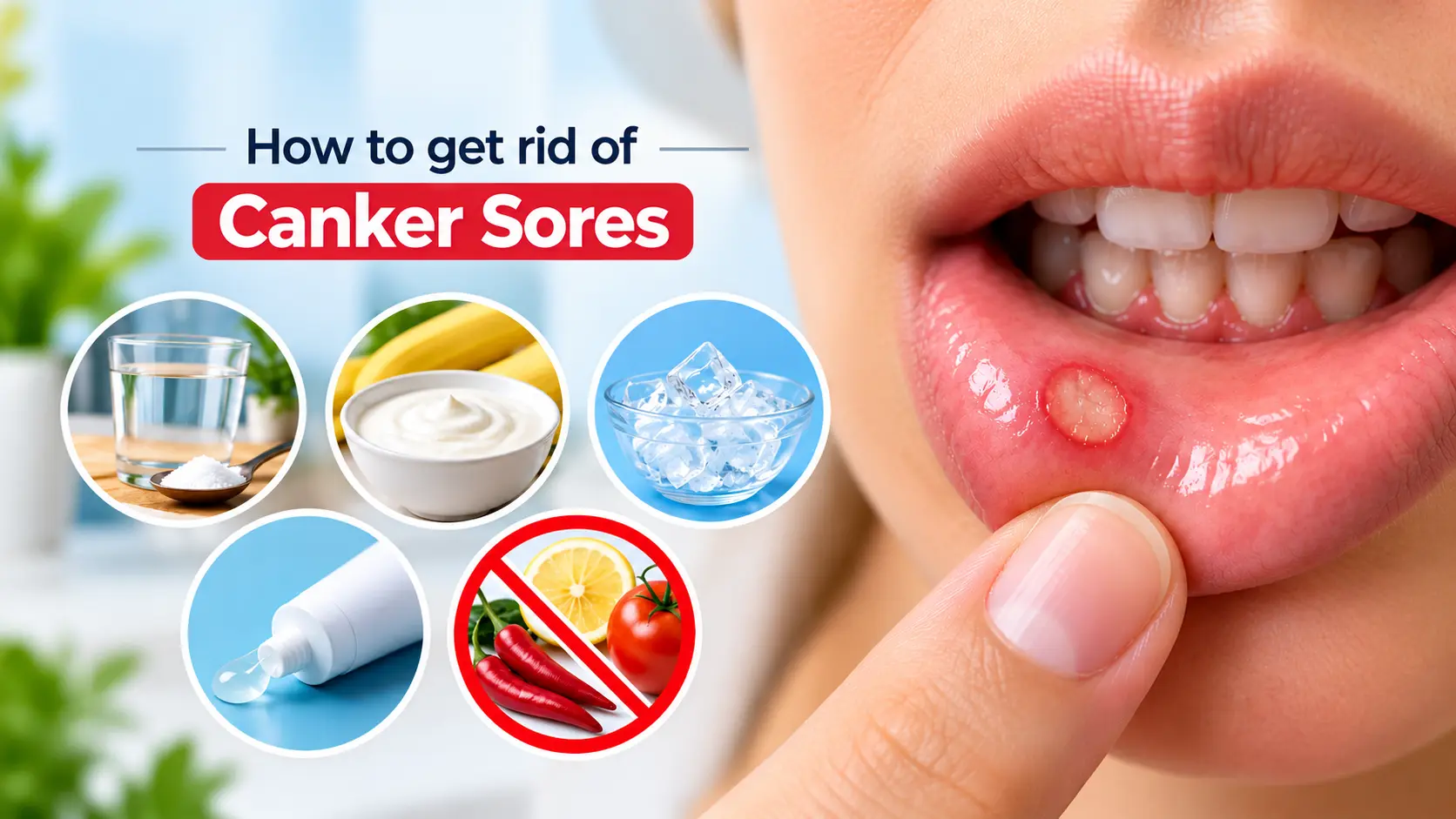
To get rid of a canker sore, focus on relieving pain and protecting the ulcer while it heals. Gentle saltwater rinses, soft foods, and suitable over-the-counter oral pain-relief products can help manage discomfort. Most minor canker sores heal within 7 to 14 days, and no home remedy can reliably make them disappear overnight.
If a sore lasts longer than two weeks, keeps returning, or makes eating and drinking difficult, see a dentist in Glendale or a healthcare professional.
How Do You Get Rid of a Canker Sore Fast?
Although you cannot make a canker sore heal overnight, you can take a few simple steps to reduce pain and avoid further irritation.
- Rinse with warm salt water: Mix half a teaspoon of salt into a glass of warm water. Swish gently for about 30 seconds, then spit it out. Stop if it causes significant stinging.
- Eat soft, cool foods: Choose yogurt, mashed potatoes, applesauce, or soft oatmeal. Avoid foods that scrape against the ulcer.
- Avoid irritating ingredients: Citrus fruits, tomatoes, spicy foods, and very hot drinks may worsen discomfort.
- Brush gently: Use a soft-bristled toothbrush and avoid brushing directly over the sore.
- Try an oral pain-relief product: An appropriate numbing gel or protective paste may temporarily reduce pain. Follow the product’s instructions and age restrictions.
These measures can make healing more comfortable, but they do not guarantee faster recovery.
What Home Remedies Help Canker Sores?
Simple home remedies may ease irritation without requiring complicated treatments.
Saltwater Rinse
A diluted saltwater rinse can help maintain oral hygiene while a canker sore heals.
Mix half a teaspoon of salt into approximately eight ounces of warm water. Swish gently and spit it out. You may repeat this 2 or 3 times daily if it feels comfortable.
Saltwater is a supportive measure, not an instant cure.
Baking Soda Rinse
A baking soda rinse is another option for mild mouth irritation.
Mix half a teaspoon of baking soda into a glass of warm water, rinse gently, and spit it out.
Avoid placing dry baking soda directly on the ulcer because it may irritate the tissue.
Cold Water or Ice Chips
Sipping cool water or allowing a small ice chip to melt in your mouth may temporarily ease discomfort.
Avoid prolonged direct contact between ice and the sore.
What About Honey and Other Natural Remedies?
Honey and several other natural remedies have been studied for mouth ulcers, but the available evidence varies in quality.
They are not reliable overnight cures. Avoid applying essential oils, undiluted acids, or other harsh substances directly to the ulcer.
What Can You Put on a Canker Sore to Stop the Pain?
Over-the-counter oral products may help reduce discomfort during eating and speaking.
Numbing Gels
Some oral gels contain local anesthetics, such as benzocaine, which temporarily numb the affected area.
However, benzocaine can cause a rare but serious condition called methemoglobinemia.
Do not use oral benzocaine products in children younger than two years. For older children, consult the product’s instructions and seek professional advice when needed.
Adults should also follow the recommended dosage and application instructions.
Protective Pastes and Patches
Oral protective pastes and patches can create a barrier over the ulcer, reducing contact with food and other irritants.
Choose products specifically designed for use inside the mouth.
Prescription Treatments
For severe or frequently recurring canker sores, a dentist or doctor may prescribe a treatment to reduce inflammation and discomfort.
Depending on the condition, this may include a topical corticosteroid preparation.
Prescription medications should be used only as directed by a healthcare professional.
What Should You Avoid Applying?
Never place aspirin directly against a canker sore. It can cause a chemical burn.
Also avoid raw salt, undiluted essential oils, and harsh mouthwashes that sting significantly.
Can You Get Rid of a Canker Sore Overnight?
No. No reliable treatment makes a canker sore disappear completely overnight.
However, pain relief and healing are different.
An appropriate numbing gel or cool water may temporarily reduce discomfort, while the damaged mouth tissue generally takes several days to repair.
Most minor sores heal within one to two weeks.
Instead of aggressive home treatments, focus on protecting the ulcer and avoiding irritation.
How Long Does a Canker Sore Take to Heal?
Healing depends on the ulcer’s size and type.
| Canker Sore Type | Typical Healing Time | Characteristics |
| Minor | 7–14 days | Small, shallow ulcers that usually heal without scarring |
| Major | Several weeks | Larger, deeper ulcers that may leave scars |
| Herpetiform | Often 7–14 days | Clusters of small ulcers that may merge |
Despite their name, herpetiform canker sores are not caused by the herpes virus.
If an ulcer persists beyond two weeks, see a dentist or doctor instead of assuming it will heal on its own.
Canker Sore vs. Cold Sore: What’s the Difference?
Canker sores and cold sores are different conditions.
| Feature | Canker Sore | Cold Sore |
| Location | Usually inside the mouth | Commonly on or around the lips |
| Appearance | Shallow ulcer with a pale center and red border | Often begins as fluid-filled blisters |
| Cause | Multiple possible triggers | Herpes simplex virus |
| Contagious | No | Yes |
| Treatment | Symptom relief and avoiding irritation | Antiviral treatment may be appropriate |
Canker sores are not contagious. Cold sores, however, can spread through close contact.
If you’re unsure which condition you have, a healthcare professional can examine the affected area.
What Should You Avoid When You Have a Canker Sore?
Certain foods and habits can aggravate the ulcer.
Avoid or limit:
- Spicy foods and acidic ingredients
- Chips, crusty bread, and other sharp foods
- Very hot drinks
- Aggressive brushing
- Picking or scraping the sore
- Applying concentrated salt or harsh substances
- Smoking and other tobacco use
Continue your regular oral hygiene routine, adjusting your brushing technique to avoid the painful area.
When Should You See a Dentist or Doctor?
Most minor canker sores heal without professional treatment. However, an examination is recommended if:
- The sore lasts longer than two weeks.
- It is unusually large, deep, or increasingly painful.
- You develop sores frequently or in large groups.
- You experience fever, swollen glands, or other symptoms.
- Pain makes eating or drinking difficult.
- You are unsure whether the ulcer is a canker sore or another condition.
Seek prompt medical attention if you cannot drink enough fluids to stay hydrated.
A persistent mouth ulcer may have another cause and should be evaluated rather than repeatedly treated at home.
Why Do Canker Sores Keep Coming Back?
Recurring canker sores may be associated with several factors.
Mouth Injuries
Accidentally biting your cheek, brushing too aggressively, or irritation from dental appliances can trigger ulcers.
Stress
Some people get more mouth ulcers during stressful periods, although the relationship varies by individual.
Food Sensitivities
Certain foods may trigger or aggravate ulcers in susceptible people.
Tracking potential triggers may help you identify patterns.
Nutritional Deficiencies
Low levels of iron, vitamin B12, or folate may be associated with recurrent canker sores.
A healthcare professional can determine whether testing is appropriate.
Toothpaste Ingredients
Some people experience irritation from toothpaste containing sodium lauryl sulfate (SLS).
An SLS-free toothpaste may help certain individuals, although it does not prevent all canker sores.
Underlying Health Conditions
In some cases, recurring mouth ulcers are associated with digestive, immune-related, or other medical conditions.
If sores return frequently, your doctor or a Glendale dental clinic can assess possible underlying causes.
Final Thoughts
Getting rid of a canker sore usually means relieving discomfort while allowing the mouth to heal naturally. Gentle rinses, soft foods, careful brushing, and suitable oral pain-relief products can help during recovery.
Most minor canker sores heal within one to two weeks. Avoid harsh home remedies that may irritate the ulcer.
If a sore persists, causes significant pain, or returns frequently, seek professional evaluation to identify the cause and determine whether treatment is needed.
Frequently Asked Questions
How Do You Heal a Canker Sore Quickly?
Protect the sore from irritation, rinse gently with salt water if comfortable, and use an appropriate pain-relief product. These measures may ease symptoms while the ulcer heals.
Does Salt Water Cure Canker Sores?
No. Saltwater rinses may help maintain oral hygiene, but they are not a guaranteed cure and may sting.
Can You Pop a Canker Sore?
No. A canker sore is an ulcer, not a pimple or fluid-filled blister. Picking at it can damage the tissue and worsen pain.
Is It Safe to Put Salt Directly on a Canker Sore?
No. Concentrated salt may cause significant stinging and irritation. Use a diluted rinse instead.
Are Canker Sores Contagious?
No. Canker sores are not contagious and are different from cold sores caused by the herpes simplex virus.
When Should a Canker Sore Be Checked?
See a dentist or doctor if it lasts longer than two weeks, frequently returns, becomes unusually painful, or is accompanied by other concerning symptoms.