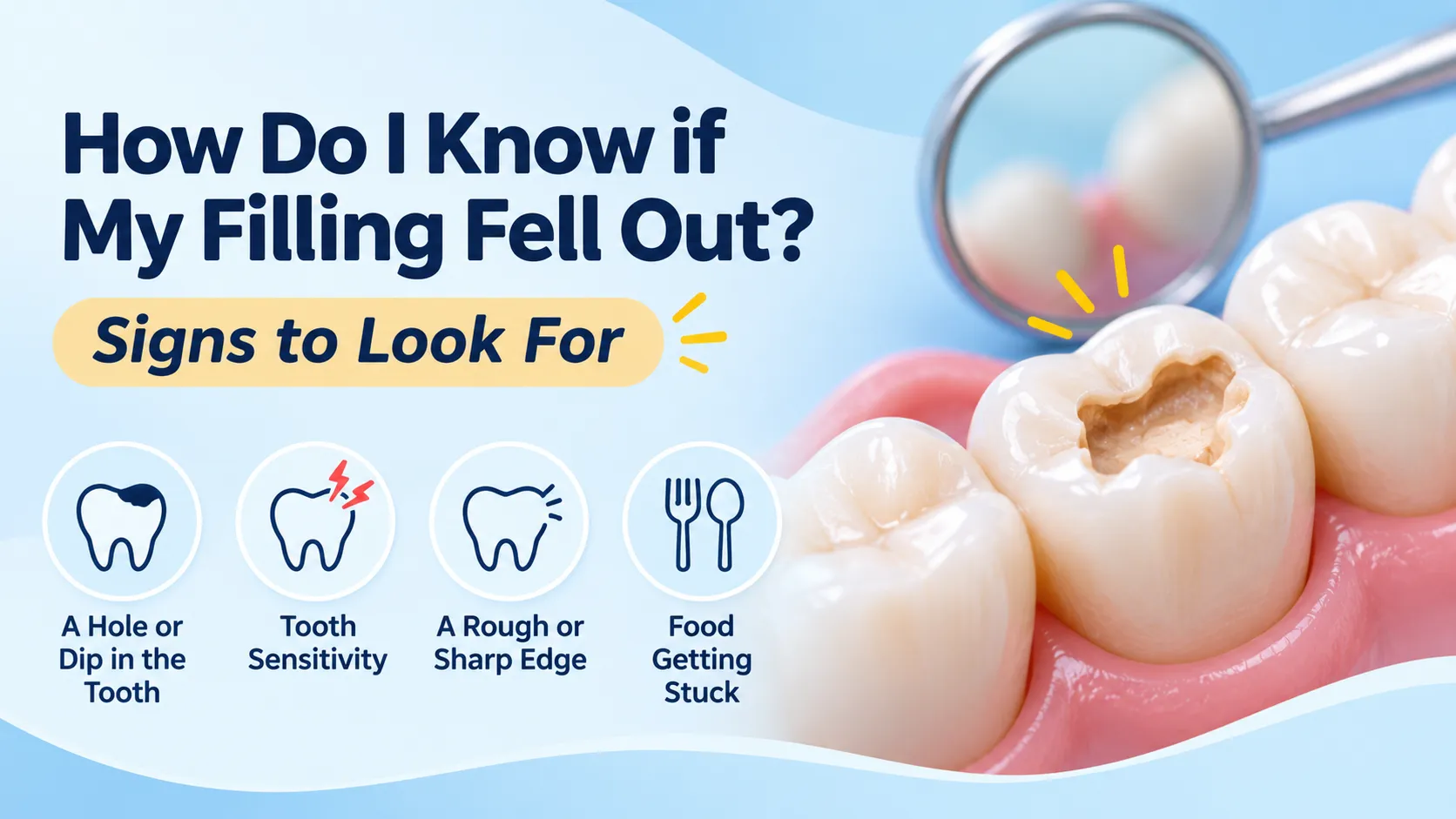
When a filling fails, you might notice a new hole or dip in the tooth, a rough or sharp edge, sudden sensitivity to cold or sweet liquids, or discomfort when chewing. You might even feel a small, hard piece in your mouth. But a lost filling does not always hurt, and a chipped tooth or damaged filling can feel the same. The only way to know for sure is to see a dentist. If you think that your filling has fallen out, make a dental appointment as soon as possible. Until then, keep the area clean, chew on the other side, and avoid hard, sticky, or temperature extremes that sensitize the area.
Here is a list of the most common symptoms:
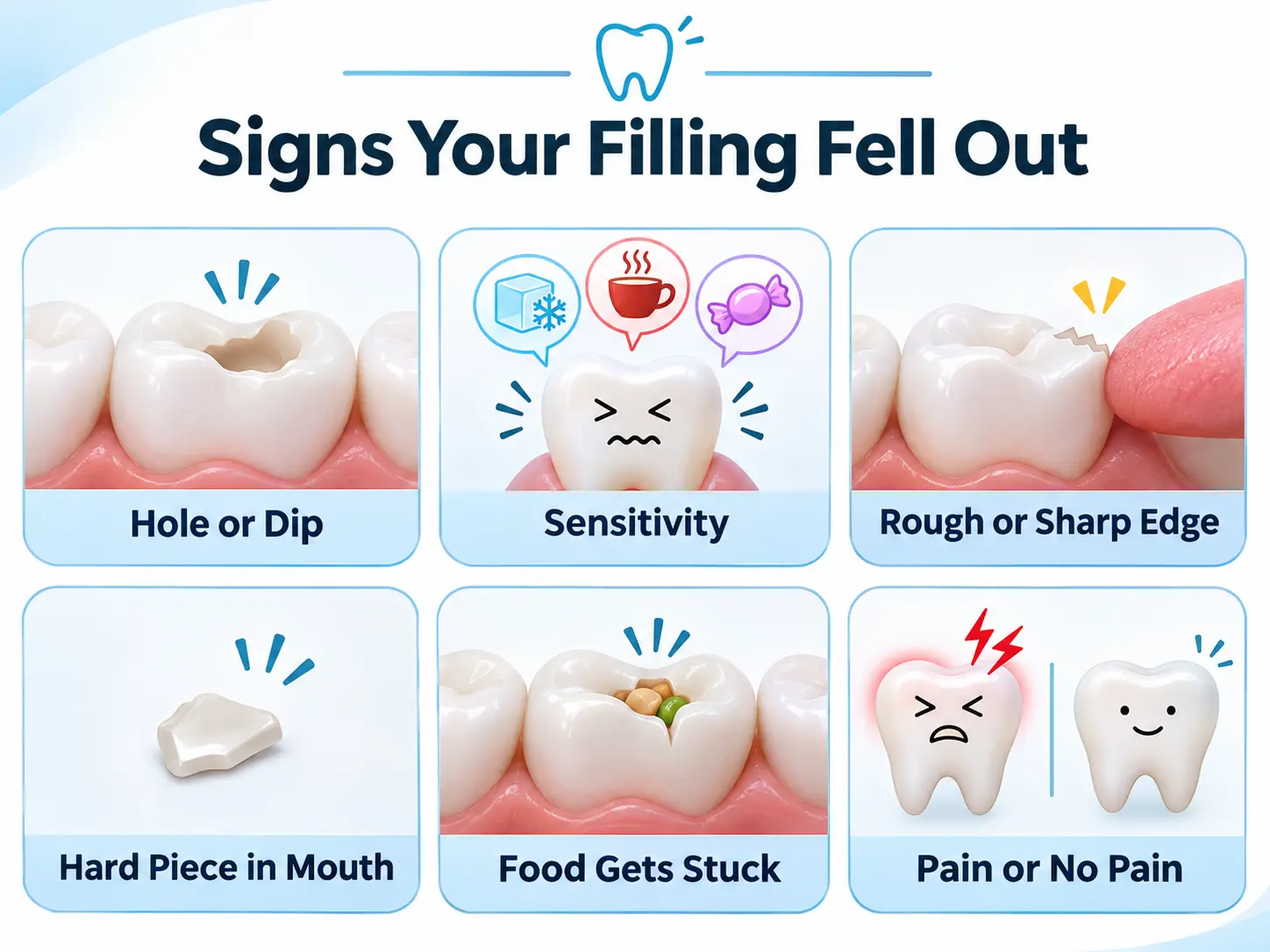
- A visible hole or depression where the filling used to be.
- A rough surface that your tongue can get caught on.
- Sudden pain or sensitivity while eating and drinking
- Food repeatedly getting stuck in the same area.
- A hard bit of material in your mouth while chewing.
What Are the Signs That Your Filling Fell Out?
If you are asking, “How do I know if my filling fell out?” a few simple changes in your mouth can give you immediate answers.
You Notice a Hole or Dip in the Tooth
When a filling comes out, it usually leaves behind a clear gap or depression where the material used to sit. You might feel this empty space with your tongue while talking or eating. Keep in mind that fillings on your back teeth can be very hard to see in a mirror, so an open gap can easily exist even if you cannot see it.
Your Tooth Suddenly Feels Sensitive
When a filling falls out, the underlying dentin may become exposed, causing sensitivity to cold air, temperature changes, sweet foods, or pressure. This often triggers sudden sensitivity when you:
- Drink or eat something very cold or hot
- Eat sweet or sugary snacks
- Breathe in cold air through your mouth
- Bite down on your food
While sensitivity is common, it doesn’t automatically mean a filling is gone. Other common dental problems can cause the exact same feeling.
Your Tongue Keeps Catching on a Rough or Sharp Edge
When a restoration breaks or falls out, it rarely leaves behind a smooth surface. You will likely feel a sharp border or rough patch on the remaining tooth. Try not to pick, scratch, or press against this sharp area with your tongue or fingers, as it can irritate your mouth or crack the tooth even more.
You Feel Something Hard Come Out of Your Mouth
Many people figure out their filling is gone while they are eating. You might feel a tiny, hard piece in your food that feels like grit, sand, or a small stone. This small piece could be a chunk of your filling, or a fragment of the tooth itself.
Food Keeps Getting Stuck in the Same Spot
A lost filling changes your tooth’s shape and creates a new space where food can gather. If you suddenly find yourself needing to clean out the exact same tooth after every single meal, a loose or missing restoration might be the cause.
You Have Pain or No Pain at All
It is easy to assume that a lost filling will always hurt, but that is not always true. If the tooth has had past treatment or the sensitive inner layers aren’t fully exposed, you might feel no pain. Not feeling pain doesn’t mean the tooth is safe, so you still need to have it checked.
Can a Filling Fall Out Without You Noticing?
Yes, a filling can easily come out without causing sharp pain or any sudden sensation. Normal chewing force, day-to-day wear, or decay around the edge can compromise the filling over time.
You may even bite off a small piece of a filling while eating or sleeping without realizing it. In those cases, you may not notice a problem until a few days later, when food lodges in the area or a dentist finds it during a routine check-up.
How Can You Tell if Your Filling Fell Out or Your Tooth Chipped?
A broken tooth and a lost filling can look very similar, and it can be hard to tell the difference on your own.
If you have a new opening where a filling used to be, the filling is probably missing or broken. A sharp outer edge or missing corner may indicate chipped tooth structure. If the filling suddenly becomes sensitive without visible signs of damage, you may have another problem.
If you notice a hard fragment in your mouth, it may be a piece of filling material or a fragment of your natural tooth. Lastly, when you feel sharp pain when you bite down, it could be a crack, deep decay, or significant damage to the filling.
Because these warning signs overlap so much, don’t try to figure out the exact cause on your own. A dentist will need to take a close look to see what really happened.
What Should You Do if Your Filling Fell Out?
If you think your filling is gone, taking a few basic steps will protect your tooth while you wait for your visit:
- Contact your dentist: If you suspect your filling has fallen out, contact a dental practice offering dental fillings in Glendale and explain whether you’re experiencing pain or sensitivity.
- Keep the area clean: Gently brush around the tooth with a soft toothbrush. Rinse your mouth after eating with warm salt water to dislodge food particles.
- Avoid chewing on the affected tooth: Chew on the opposite side of your mouth until your dentist examines the damaged filling. This can help reduce pressure on the weakened tooth.
- Eliminate trigger foods: Avoid very hot, freezing cold, sweet, hard, and sticky foods that can cause pain or adhere to the exposed area.
- Take over-the-counter pain relievers: If the tooth hurts, common pain relievers can help relieve the pain. Read and use the instructions on the bottle.
- Seek temporary dental material: If you can’t see a dentist right away, ask a pharmacist about temporary dental material. Do not glue or super glue a tooth.
Is a Lost Filling a Dental Emergency?
A missing filling needs prompt attention but doesn’t always require emergency dental care. Severe pain, increasing swelling, or significant tooth damage may require urgent evaluation. If you don’t have pain, see your dentist at your next appointment as soon as you can to prevent bigger problems.
If there is any pain, swelling, or a tooth is broken in a bad way, you should request an urgent appointment the same day. However, you should go to an emergency room right away if you have trouble breathing, trouble swallowing, or fast-spreading swelling in your face or neck.
What Happens if You Leave a Lost Filling Untreated?
When a filling falls out, the exposed area may trap food and bacteria, increasing the risk of additional tooth damage.
Possible complications include:
- Increased sensitivity: Exposed dentin may become more sensitive to temperature changes, sweet foods, and chewing pressure.
- Further tooth decay: Bacteria and plaque can accumulate around the damaged area, potentially leading to new or worsening decay.
- Tooth fractures: Remaining tooth structure may be weakened, increasing the risk of cracks or additional breakage.
- More extedental crownnsive treatment: A tooth that could initially be repaired with a filling may eventually require a crown or other treatment.
Prompt dental evaluation can help prevent complications and determine the most appropriate repair.
How Will a Dentist Fix a Lost Filling?
During the visit, the dentist will examine the area and select the appropriate repair depending on the amount of natural tooth remaining:
- Replacing the filling: If enough healthy tooth structure remains, the dentist may remove any decay or damaged material and place a new filling.
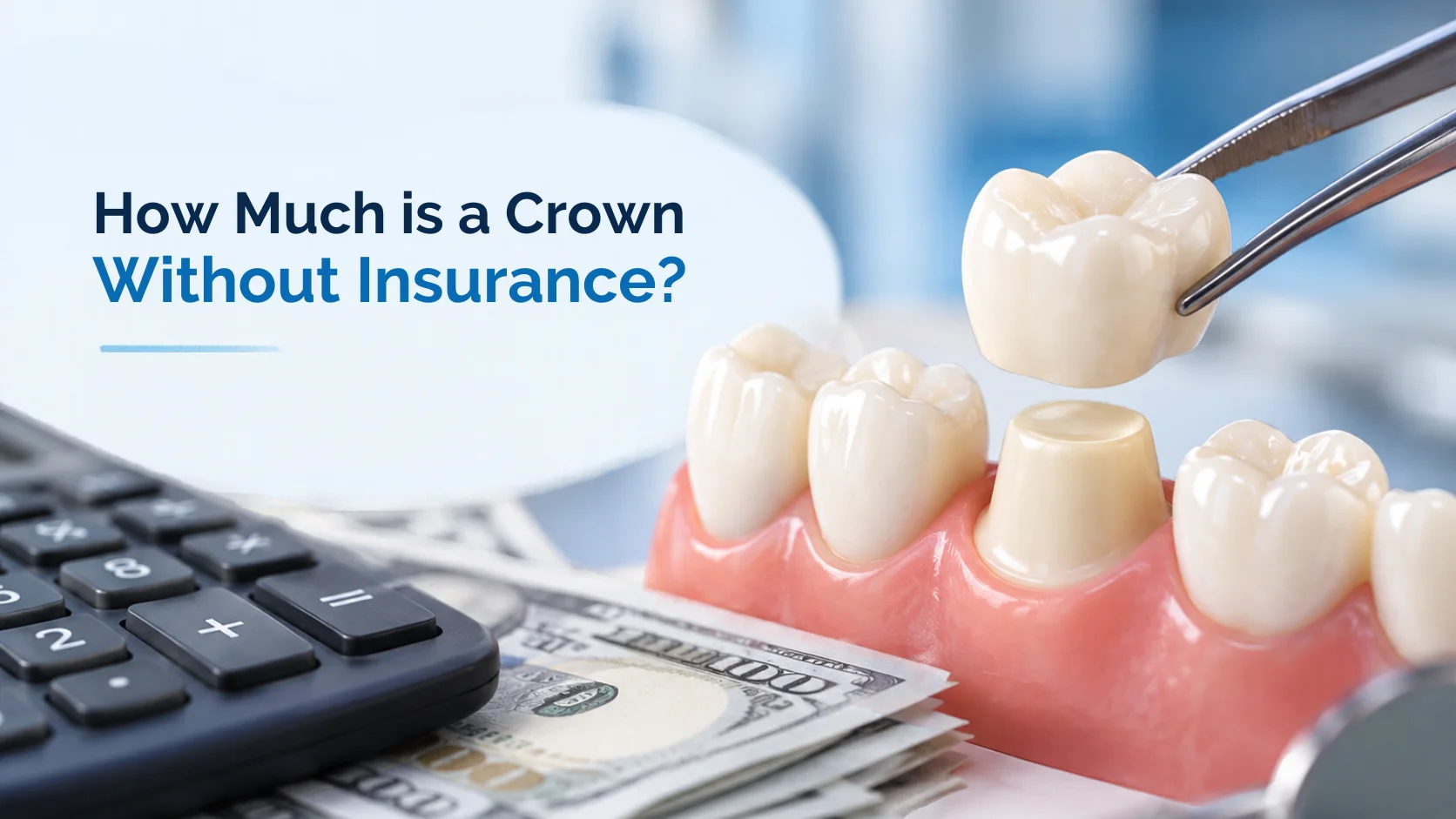
- Placing a dental crown: If a large portion of the tooth is broken or too little healthy structure remains for another filling, the dentist may recommend a dental crown to protect and restore it.
- Cleaning out new decay: If decay started under the old filling, the dentist removes it before restoring the surface.
If you’re concerned about the cost, reviewing emergency dental treatment costs can help you understand potential charges for an examination, X-rays, and replacement fillings.
Frequently Asked Questions
Can a filling fall out without pain?
Yes. If the nerve inside the tooth is not close to the surface, a missing filling might not hurt.
Will I know if my filling falls out?
Not always right away. Some people feel the piece come out, while others only realize it later when food gets stuck or sensitivity starts.
What does a lost filling look like?
It usually looks like a small dark gap, a hollow dip, or a clear hole on the top or side of your tooth.
Can I wait a few days if my filling falls out?
If there is no pain or swelling, a short wait may be reasonable. Contact your dentist promptly for scheduling advice, keep the area clean, and seek earlier care if symptoms develop.f
Can I temporarily fill the hole myself?
You can use over-the-counter temporary dental material to cover sharp edges for a short time. This is only a temporary fix and cannot replace a real dental repair.
What if I swallowed my filling?
A tiny piece of filling usually passes safely through your body. If you think you breathed it in or start coughing and having trouble breathing, seek emergency medical care immediately.
Final Thoughts
If you notice a hole in your tooth, a rough edge, sudden sensitivity, or food repeatedly getting stuck, your filling may have fallen out. However, similar symptoms can occur with a chipped tooth or damaged restoration.
Not sure if your filling is missing? Schedule a dental examination to identify the problem and determine whether you need a replacement filling or another treatment. Until your appointment, keep the area clean and avoid chewing on the affected tooth.