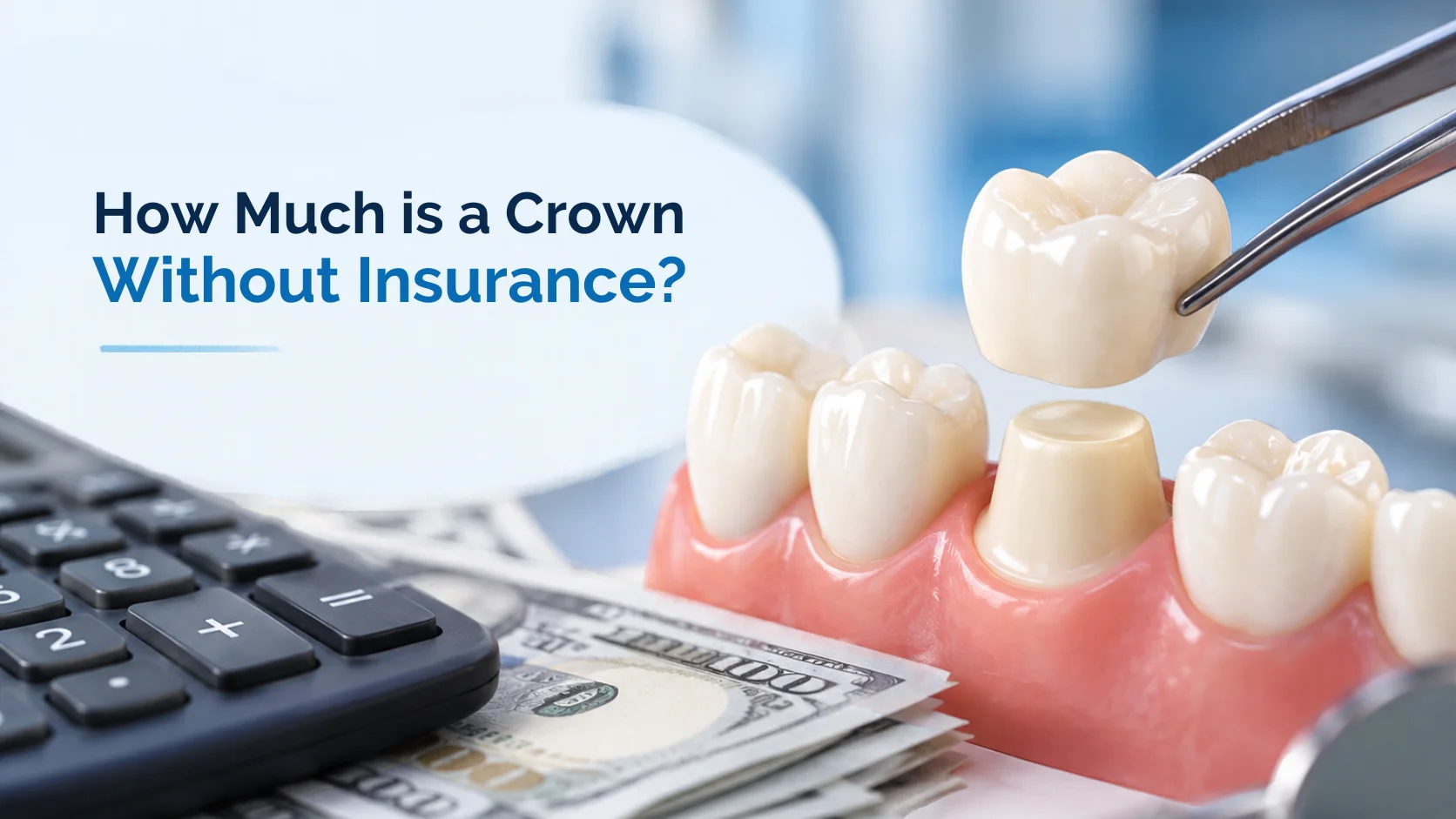
If you need a dental crown and do not have dental insurance, a broad planning estimate in the United States is roughly $800 to $2,500 per tooth. The cost of a crown without insurance depends heavily on the crown material, the practice’s location, and whether your tooth needs additional work before the crown can be placed.
A quoted fee often covers the crown itself and placement, but it may not include root canals, core buildups, or diagnostic imaging. Since out-of-pocket costs can differ wildly from one provider to the next, commit to a treatment plan only if you have a written, itemized estimate.
Never postpone treatment because of cost; many offices offer financing options, payment plans, and discounts for self-pay treatment.
How Much Does a Dental Crown Cost Without Insurance?
Remember that the price quoted for a crown doesn’t always include the total cost without insurance. If you don’t have dental insurance, a single tooth can cost $800 to $2,500 or more, depending on several factors.
If you get a price estimate, check with the dental office to see if the fee is for all of these:
- Complete examination and diagnostic imaging (X-rays)
- Removal, reshaping, and preparation of teeth
- Permanent crown & dental laboratory fabrication fees
- A temporary crown to protect your tooth while the custom crown is made
- Placement, cementation, and bite adjustment are done in the final stage.
- Follow-up visits for additional bite adjustments if needed
Not all dental practices include these services in a single price. When considering dental crowns in Glendale, knowing what each estimate covers helps you understand the total cost.
How Much Do Different Types of Dental Crowns Cost?
One of the biggest factors in the total fee is the material that is used to create a crown. The following table provides only a general guide to costs for uninsured patients:
| Crown Type | Illustrative Cost Range (Without Insurance) | Key Characteristics |
| Porcelain-Fused-to-Metal (PFM) | $500 – $1,800 | Combines a durable metal core with a tooth-colored porcelain exterior. |
| All-Ceramic or Porcelain | $800 – $3,000 | Highly natural appearance; frequently chosen for visible front teeth. |
| Zirconia | $1,000 – $3,000 | Exceptionally strong ceramic restoration suitable for both front and back teeth. |
| Gold or Metal Alloy | $600 – $2,500 | Extremely durable metal option often recommended for back molars. |
Extremely durable metal option often recommended for back molars.
No single material is best for all patients. Metal alloys and zirconia resist heavy chewing forces in back teeth; all-ceramic is best for aesthetics in front teeth. When receiving dental care in Glendale, your dentist will consider your bite, tooth placement, and tooth structure to recommend the most suitable crown material.
What Can Make a Crown More Expensive?
If the tooth under the quote needs prep work to ensure a stable, infection-free foundation, that is only part of the fee; additional fees apply for the prep work. These are some of the common processes that add to the final bill:
- Root Canal Treatment: If the tooth’s inner pulp is infected or heavily damaged, a root canal must be done before the crown can be placed. This is also separate and will increase your cost by $700 to $1,500 or more.
- Core Buildup or Post: When a tooth is severely broken down or decayed, there may not be enough natural structure left to hold a crown. The core buildup, and sometimes a structural post, re-establishes the tooth’s form so the crown fits.
- Temporary Crown Fees: Most custom laboratory crowns take 2 weeks to make. Verify if the temporary crown is a part of the base price or is quoted separately.
- Diagnostic X-rays and Exams: Before treatment, new patients typically have diagnostic X-rays and exams to assess root structure.
- Practice Location and Lab Fees: Dental fees reflect local overhead, regional dental quality, and specialized equipment (like same-day CAD/CAM milling).
Comparisons between two different price estimates aren’t valid unless you confirm both include the same preparatory procedures.
Does the Price Change Depending on Which Tooth Needs a Crown?
Yes, the tooth’s location and condition an affect the clinical approach and overall cost.
For front teeth, a precise color match, translucency, and aesthetic details are necessary to fit a smile and often require precision, high-end ceramic materials, and skilled lab technicians. Molars (back teeth) chew food and must withstand a lot of pressure, which is why zirconia or gold is used for these stronger materials.
The placement procedure is similar, but the amount of material needed and/or the prep required can change the overall cost.
How Can You Pay for a Dental Crown Without Insurance?
There are several practical ways of reducing your out-of-pocket costs, or of making them more affordable, if you don’t have insurance coverage:
- Ask About Self-Pay Discounts: Many dental offices offer a discount for direct cash/cheque payment, since they avoid insurance processing fees.
- Ask for an Itemized Written Estimate: Get a full treatment plan with each code, procedure description, and fee before treatment is performed.
- Offer Flexible Payment Plans: Some offices work with healthcare financing companies (like CareCredit or Sunbit) and/or offer their own payment options to break treatment costs into monthly payments. Always check interest rates and terms.
- Check Out Dental School Clinics: Dental schools have clinics where students train under supervision and provide care at a much lower cost. Please note that appointments may be longer and more limited.
- Visit Community Health Centers: Federally Qualified Health Centers (FQHCs) and local non-profit clinics may provide needed dental services on a sliding-fee basis, depending on household income.
- Compare Dental Savings Plans: These membership programs allow for reduced fees at specific dental offices for an annual fee. Check with your dentist to see whether they follow the plan before signing up.
What Should You Ask Before Agreeing to a Crown?
To provide financial transparency at your consultation, use this printable checklist:
- What is the total estimated out-of-pocket cost for restoring this tooth?
- Does this quote cover tooth preparation, temporary, lab costs, and final placement?
- Does this tooth need a core buildup, post, or a root canal before the crown can be placed?
- Does this fee include initial X-rays, exams, and follow-up bite adjustments?
- Is there a clinically acceptable, lower-cost alternative material for this tooth?
- Do you provide a discount for self-pay or flexible payment options?
- Do I need to wait to get a written treatment plan?
Is a Dental Crown Worth the Cost?
If a tooth is structurally damaged, has extensive decay or a deep crack that a filling would not be able to withstand, a dental crown is recommended. A crown preserves the remaining tooth structure, maintains proper chewing function, and helps prevent deep fractures that can lead to tooth loss.
If cost is a concern, discuss the need for a crown, the alternatives, and the potential risks of delaying care. While delaying care might seem like a way to save money, ignoring a compromised tooth can lead to severe infection, emergency procedures, or eventual extraction and replacement, which is far more costly in the long run.
Take the Next Step for Your Smile
Restoring your tooth should not cause overwhelming financial stress. Call our friendly staff at Glendale Dental Office today to schedule an evaluation, get an itemized quote, and discuss workable self-pay payment solutions. We are here to help you get the care you need comfortably and affordably.
Frequently Asked Questions
Which dental crown without insurance is the most affordable?
Typically, PFM and basic metal alloy crowns cost less than high-end all-ceramic restorations. But the best material depends on the tooth needing care and your bite strength.
Does the price of a crown include a root canal?
No. Root canal therapy is an separate treatment for infected nerve tissue within the tooth. It isn’t part of the crown and is billed separately.
Can I get a crown without paying the entire amount upfront?
Yes. Most practices offer financing options, health care credit cards, or in-house payment plans that let you pay over time.
Can I get a dental crown at a reduced rate at a dental school?
Yes. Dental school clinics offer good care under the supervision of trained and licensed faculty at reduced rates, but the time commitment may be longer.
Can I delay having a crown if I don’t have the money for it now?
If you have any questions about the delay, it’s best to talk to your dentist directly. A cracked or decayed tooth may deteriorate very quickly. Note: If facial swelling is severe, or you have fever or difficulty breathing or swallowing, seek emergency medical attention, as these are signs of a spreading infection.
What is the accurate cost of a dental crown in Clarksville, TN?
Call local dental offices for a consultation and an itemized treatment estimate to find a reliable dental crown cost in Clarksville, TN. Local practices can provide specific information about self-pay rates, local lab fees, and available financing options.
Note: Clinical information provided in this guide is for educational purposes only. Treatment needs and costs are only determined after a clinical examination by a licensed dentist.