Dental health is an important part of your health, but many individuals experience dental issues at some point in their lives. Some of the problems will be small and simple to solve, but they can become serious if left unaddressed for too long. Regular dental visits with a trusted dentist in Glendale residents rely on can help identify problems early and prevent more complex treatment later.
Some dental problems are seen more often than others among Glendale Arizona patients. Understanding these common oral health concerns can help patients recognize early warning signs and seek treatment before problems become more serious.By becoming aware of these common dental issues, patients can be more vigilant about caring for their teeth and gums and look for warning signs.
01: Tooth Decay and Cavities
Tooth decay is one of the most common dental issues in Glendale. The cavities arise from the possible presence of bacteria in the mouth that consume sugars and produce acids that gradually affect tooth enamel. Over time, decay can spread, creating larger holes in the teeth.
Some of the symptoms of cavities are:
- Tooth sensitivity
- Having trouble eating sweets
- Holes or dark spots may be visible on the leaves.
- Toothache
Early signs of cavities are often missed, which is why regular checkups and timely dental fillings are important for preventing further tooth damage.
02: Gum Disease
Many adults have gum problems, and even some younger patients develop gum disease. It typically starts with gingivitis, which is a mild inflammation of the gums that is caused by an accumulation of plaque around the teeth. It can develop into periodontitis (gum disease) if left untreated, causing gum and bone deterioration. You can learn more about the stages and progression of periodontitis to better understand how advanced gum disease affects oral health.
These are the symptoms of gum disease:
- Swollen gums that are red in color.
- Any bleeding or gums that are sore gums during brushing or flossing.
- Persistent bad breath
- Receding gums
- Loose teeth
Fortunately, gum disease can often be treated successfully through professional cleanings and proper oral hygiene habits. You can also read our guide on how to prevent gum disease before it gets serious to learn simple daily habits that help protect your gums.
03: Tooth Sensitivity
Tooth sensitivity is a common complaint of many patients. This makes it uncomfortable to eat hot, cold, sweet, or acidic foods and drinks. The pain is mild to severe.
Sensitive teeth can be caused by:
- Worn enamel
- Gum recession
- Cavities
- Teeth grinding
- Cracked teeth
However, since sensitivity may indicate a more severe dental problem, if symptoms persist, talk with a dentist. In some cases, a fluoride treatment may help strengthen enamel and reduce sensitivity.
04: Teeth Grinding and Clenching
Clenching, or teeth grinding, is more common than ever. Teeth grinding or clenching during sleep is common to many people and is an unconscious activity. This condition can be due to stress, anxiety, sleep disorders, and bite issues.
It is suggested that you have signs of teeth grinding if:
- Jaw pain
- Morning headaches
- Worn tooth surfaces
- Tooth sensitivity
- Facial discomfort
Grinding left unchecked can lead to serious damage to teeth and to the risk of fractures.
05: Cracked or Chipped Teeth
Cracked or broken teeth can occur as a result of an accident, sport-related injuries, chewing hard food, or grinding your teeth. The damage is sometimes noticeable, but most of the time the cracks are too small to be seen without a detailed examination.
Cracked teeth can cause:
- Pain when chewing
- Sensitivity to temperature variations.
- Sore when biting into food
Good treatment can prevent further damage and help to save the affected tooth. Depending on the severity of damage, dental crowns may help protect and restore the affected tooth.
06: Bad Breath
It’s normal to experience bad breath occasionally, but chronic bad breath could be a warning sign of a dental issue.
Common causes include:
- Poor oral hygiene
- Gum disease
- Tooth decay
- Dry mouth
- Particles of food stuck between the teeth
Chronic bad breath is a surprise to many patients because they don’t realize that bacterial accumulation in the mouth is a cause of their bad breath. Typically, professional cleaning and proper home care will enhance the situation.
07: Missing Teeth
One of the most frequent concerns of adults in Glendale is missing teeth.
There are various reasons why teeth can be lost:
- Severe decay
- Gum disease
- Injuries
- Aging-related dental issues
Tooth loss can affect a person’s self-confidence, appearance, speech, and ability to chew. They can also cause other teeth to move, leading to further oral health issues. Modern treatment options such as dental bridges and dentures & partials can help restore appearance, function, and confidence. Patients experiencing tooth loss often benefit from consulting a Glendale Dentist to discuss the most appropriate tooth replacement options.
Protect Your Smile With Early Dental Care
Many dental problems are easier to treat when diagnosed early. If you’re experiencing tooth pain, sensitivity, bleeding gums, or other oral health concerns, we’re here to help.
08: Wisdom Tooth Problems
A problem with the wisdom teeth generally happens during the late teens or early 20s. Sometimes these teeth do not erupt properly due to a lack of space in the mouth. This can result in impacted wisdom teeth, pain, swelling, infection, and crowding.
Common symptoms include:
- Jaw pain
- Swollen gums
- Lack of ability to open the mouth.
- Sore back of the jaw
Routine dental check-ups can determine whether the wisdom teeth should be monitored or removed.
09: Dry Mouth
People with dry mouth may see it as a minor issue, but it can significantly affect oral health. Saliva is essential in helping to protect teeth and wash away bacteria. A decrease in saliva leads to an increased risk of cavities and gum disease.
Dry mouth may be caused by:
- Certain medications
- Medical conditions
- Dehydration
- Aging
If a patient continues to have dry mouth, he or she should consult with the dentist about treatment.
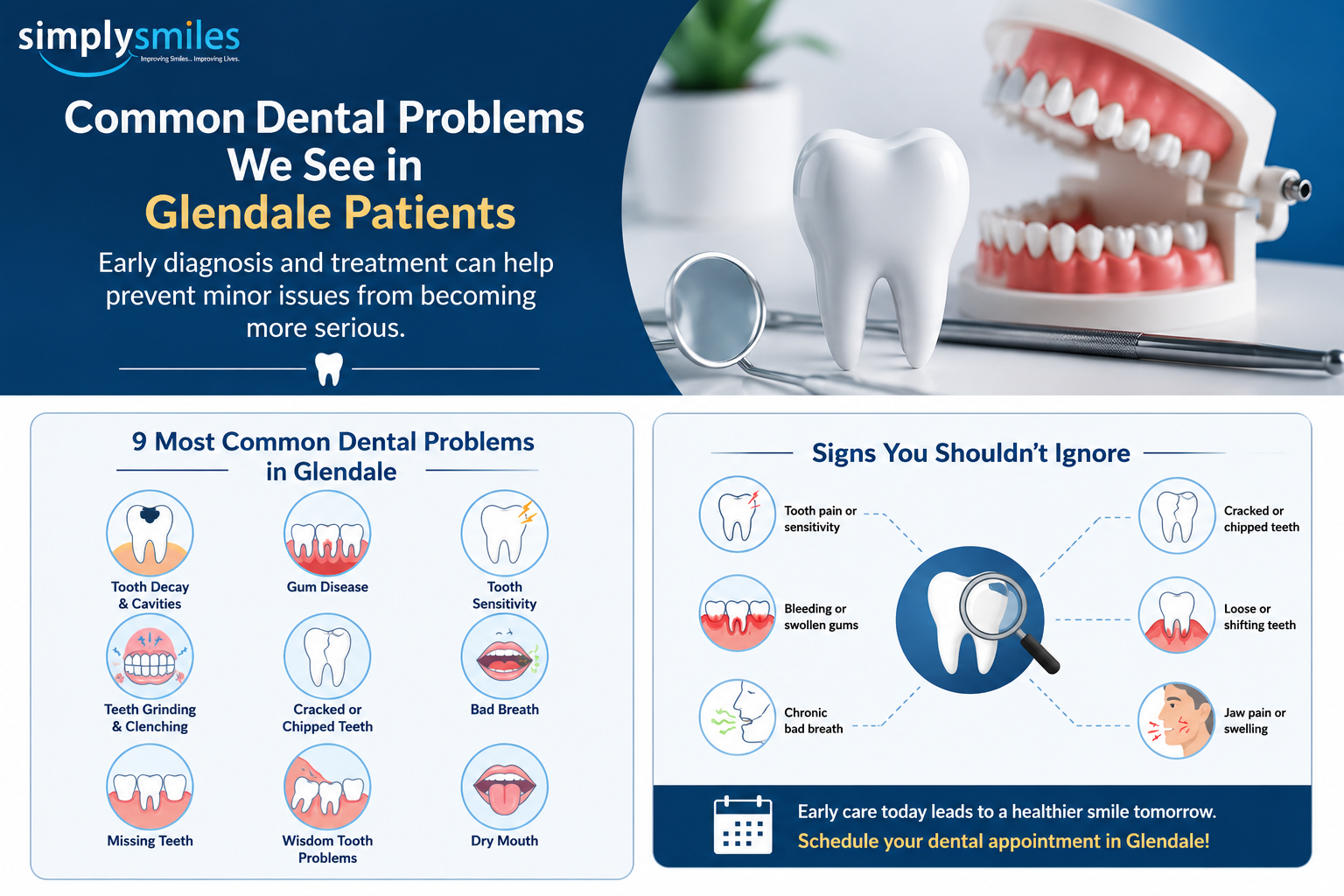
What Are the Most Common Dental Problems in Glendale AZ?
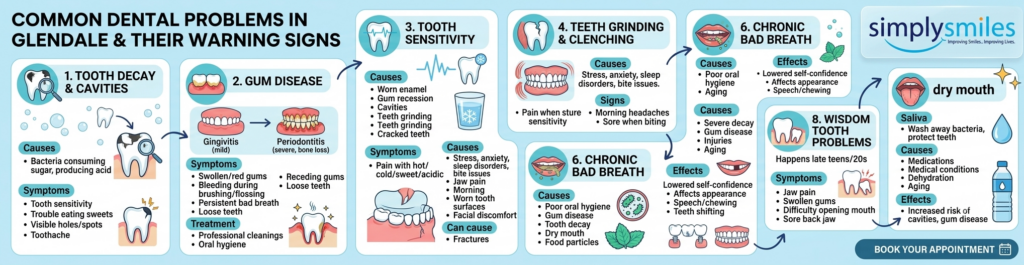
The most common dental problems treated by a Dentist Glendale Arizona residents trust include:
- Tooth decay and cavities
- Gum disease
- Tooth sensitivity
- Teeth grinding and clenching
- Cracked or chipped teeth
- Chronic bad breath
- Missing teeth
- Wisdom tooth complications
- Dry mouth
At Simply Smiles, we regularly help Glendale AZ patients identify and treat these oral health concerns before they become more serious. Through routine dental exams, professional cleanings, and preventive care, many dental problems can be managed early and treated more effectively.
If you’re experiencing any of these symptoms, visiting a Professional Dentist for an evaluation can help protect your long-term oral health and prevent more complex dental issues in the future.
When Should You Visit a Dentist for Dental Problems?
You should schedule a dental appointment if you experience persistent tooth pain, bleeding gums, prolonged sensitivity, loose teeth, chronic bad breath, swelling, or visible damage to a tooth. Early diagnosis often leads to simpler and more effective treatment while helping protect your long-term oral health.
Final Thoughts
Many of the dental issues encountered by Glendale patients could be avoided or treated more easily if they were diagnosed early. Common dental problems include tooth decay, gum disease, tooth sensitivity, teeth grinding, cracked teeth, bad breath, missing teeth, wisdom tooth issues, and dry mouth.
The best protection for oral health is routine checkups, cleanings, and good home care. Regular brushing, flossing, and early diagnosis of symptoms will help maintain a healthy smile and prevent further severe dental issues.
Frequently Asked Questions
What is the most common dental problem in Glendale?
Tooth decay and cavities are among the most common dental problems affecting Glendale patients. Regular dental exams can help identify decay early and prevent more extensive treatment.
How do I know if I have gum disease?
Common signs of gum disease include bleeding gums, redness, swelling, persistent bad breath, gum recession, and loose teeth. Early treatment can help prevent more serious complications.
Should I see a dentist for tooth sensitivity?
Yes. Tooth sensitivity may be caused by worn enamel, cavities, gum recession, teeth grinding, or other dental concerns. A dental evaluation can help determine the underlying cause.
Can a cracked tooth heal on its own?
No. Cracked teeth do not heal naturally. Prompt treatment can help prevent additional damage and improve the chances of preserving the affected tooth.
What should I do if I lose a tooth?
If a permanent tooth is lost due to injury, decay, or other causes, contact a dentist as soon as possible. Early treatment may improve the available restoration options.
How often should I visit the dentist?
Most patients benefit from professional dental exams and cleanings every six months. However, some individuals may require more frequent visits based on their oral health needs.