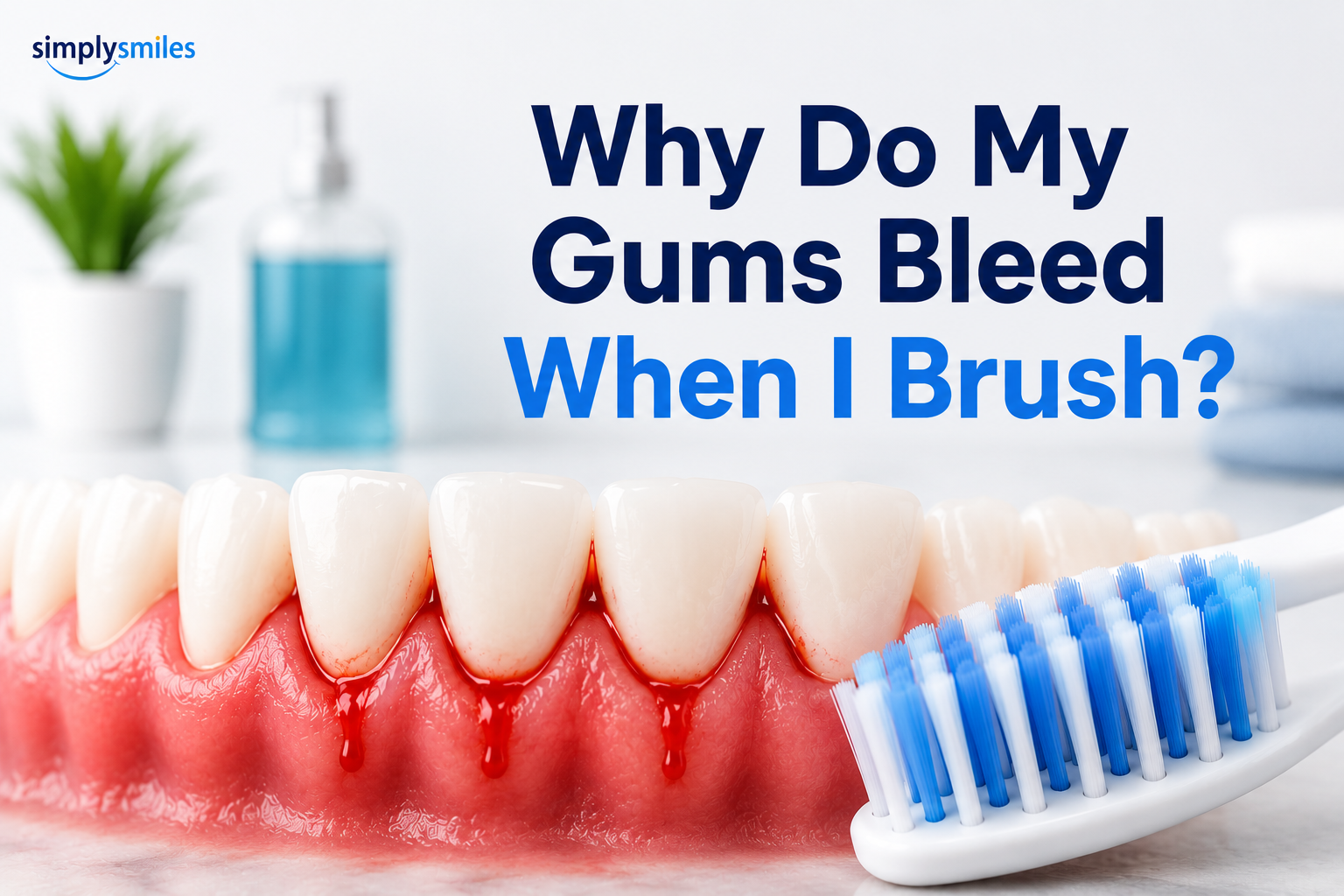
Seeing blood in the sink after brushing your teeth can be alarming, especially when you’re not experiencing any pain or obvious dental problems. If you’ve been wondering why your gums bleed when you brush, it’s because healthy gums generally should not bleed during routine oral care.
Bleeding gums in most instances is an early indicator of inflammation resulting from the accumulation of plaque, gingivitis, brushing practices, hormonal shifts or some underlying health condition. Fortunately, there are numerous causes that can be treated or even reversed if diagnosed in time.
This comprehensive 2026 guide will help you understand the most common causes of bleeding gums, warning signs to look out for, treatment options, and what you can do to help protect your long-term oral health.
Because gingivitis is one of the most common causes of bleeding gums, understanding its early symptoms can help you take action before the condition progresses. Learn more about the early signs and causes of gingivitis and how to protect your gum health.
Is It Normal for Gums to Bleed When Brushing?
While seeing blood during your oral hygiene routine is incredibly common, it is never considered biologically normal. Healthy gum tissue is resilient, firm, and designed to withstand the daily friction of proper cleaning without tearing or leaking fluid. When the delicate blood vessels within your gingival tissues leak under light pressure, it is a localized vascular response indicating that the tissue is swollen, engorged with blood, and actively trying to fight off an irritant.
A detailed epidemiological study, published in the Journal of Clinical Periodontology, revealed that periodontal diseases were one of the most common diseases in the human population worldwide: mild inflammatory changes in the gums were observed in up to 50% or more of the adult population in different communities around the world. This high incidence rate shows you’re by no means the only one if you have this problem, but also how important it is to take care of problems in the early stages of tissue irritation so they don’t quickly infect others.
The CDC explains that bleeding gums can be a sign of gum disease, especially when accompanied by redness, swelling, tenderness, receding gums, or other changes in oral health.
What Causes Gums to Bleed When You Brush?
Below, we’ll look at the most common causes and explain how each one affects your gum health. Since plaque buildup and inflammation are common causes of bleeding gums, learning how to prevent gum disease before it gets serious can help protect your teeth and gums over the long term.
Gingivitis
Gingivitis is the earliest stage of gum disease. When sticky plaque sits on your teeth, the germs irritate your gums. Your body sends extra blood to the area to fight the germs, making your gums swollen and very easy to bleed. Luckily, this stage is completely reversible with regular brushing and flossing.
Brushing Too Hard
Scrubbing your teeth with a lot of force or using stiff bristles damages your mouth. Plaque is soft, so you do not need to scrub hard to remove it. Pushing too hard acts like sandpaper on your gums, tearing the skin and causing immediate bleeding.
New Flossing Habits
If you start flossing after a long break, your gums will bleed at first. You are disturbing old pockets of germs that have been hiding between your teeth. Keep flossing gently every day and your gums will toughen up and stop bleeding within a week.
Plaque and Tartar Buildup
When plaque stays on your teeth for a few days, it hardens into a substance called tartar. Tartar has a rough surface that traps more germs right against your gum line, causing constant irritation. You cannot brush tartar away at home; a professional must scrape it off. Regular dental cleanings and exams can help remove buildup that daily brushing cannot eliminate and allow your dentist to identify early signs of gum problems.
Periodontal Disease
If you ignore gum irritation for a long time, it turns into severe periodontal disease. The germs move deep under your gums and attack the bone holding your teeth in place. This can cause permanent bone damage and make your teeth wiggle or fall out.
Hormonal Changes
Big shifts in your hormones make your gums extra sensitive to everyday germs. This is very common during pregnancy, puberty, or menopause. Even small amounts of plaque can cause gums to swell and bleed easily during these times because your gums have more blood flow.
Vitamin Deficiencies
You need certain nutrients to maintain your tissues and body. Vitamin C is essential for the strength and integrity of blood vessels and if it is deficient, the blood vessels tear easily. A lack of Vitamin K means your blood won’t clot as easily, and any minor cut or irritation will bleed for a longer period of time.
Medications That Cause Bleeding Gums
Certain prescriptions can make bleeding more noticeable. Blood thinners, daily aspirin, and some blood pressure medicines slow down your body’s natural ability to stop bleeding. Even if you brush very gently, these medicines cause blood to flow more easily from your gums.
Medical Conditions Associated With Bleeding Gums
Persistent bleeding can sometimes link back to your overall health. Conditions like diabetes make it much harder for your body to fight off infections and heal properly, making gum irritation worse. Other issues like blood disorders can also cause fragile gums that bleed frequently.
Signs Your Bleeding Gums May Be a Serious Problem
If your bleeding comes with other symptoms, it means the problem is growing. The following five are the main danger signs to watch for:
- Weeks of daily bleeding: Bleeding every day for weeks.
- Receding Gums: Your gums are pulling back, and your teeth look longer.
- Persistent bad breath: Breath that is smelly and won’t go away even after brushing.
- Loose Teeth: A little loose when chewing.
- Pus or gum pain: having chronic gum pain or yellow discharge around teeth.
- Sensitive teeth: Cold or hot foods or drinks make teeth very sensitive.
When Should You See a Dentist for Bleeding Gums?
Occasional bleeding after brushing too aggressively may improve after switching to a soft-bristled toothbrush and using a gentler technique. However, bleeding gums that continue for more than a week or two should not be ignored.
Schedule a dental appointment if your gums bleed regularly or if bleeding occurs along with swelling, redness, tenderness, persistent bad breath, gum recession, loose teeth, or pus around the gums. These symptoms may indicate gingivitis, periodontal disease, or another underlying oral health concern.
You should also speak with a dentist if you take blood-thinning medication or have a medical condition that may affect your gums or ability to heal. A professional evaluation can help identify the cause of the bleeding and determine the most appropriate treatment before the problem becomes more serious.
How Dentists Diagnose the Cause of Bleeding Gums
A dental professional will perform some simple measures when you visit her or him for a check up to determine the cause of the bleeding: If you are looking for a trusted Glendale dentist to evaluate persistent bleeding gums and other oral health concerns, a professional dental examination can help identify the underlying cause.
- Dental exam: They check the inside of your mouth using a bright light to find if there is a red spot or swelling in your mouth.
- Gum pocket measurements: They use a small ruler to determine if teeth and gums are separating.
- Dental X-rays: This type of x-rays will show the condition of your jaw bone.
- Medical history review: They will ask you about your vitamins, stress and any medicines you are taking.
- Plaque Assessment: They look at your teeth to determine where there is hidden plaque.
How to Stop Gums From Bleeding When You Brush
Here are some practical steps you can take to improve your gum health and address the underlying causes.
Improve Your Brushing Technique
Tilt your toothbrush at a 45-degree angle toward your gums. Move the brush in gentle, tiny circles instead of scrubbing hard across your teeth.
Floss Correctly Every Day
Never snap your floss hard into your gums. Slide it down gently, curve it into the shape of the letter C against the tooth, and wipe up and down.
Use a Soft-Bristled Toothbrush
Throw away any hard brushes. Only use toothbrushes that say soft or extra-soft on the package so you do not scratch your mouth.
Use an Antibacterial Mouthwash
Rinse with an alcohol-free mouthwash every day. This helps kill the extra germs hiding in the spots your toothbrush cannot reach.
Improve Your Diet
Eat fewer sweet candies and drink less soda because germs love sugar. Eat more fruits with Vitamin C and green vegetables to keep your gums strong.
Quit Smoking and Vaping
Smoking harms your body’s ability to fight off germs. It damages your blood vessels and makes it much harder for irritated gums to heal.
Schedule Professional Dental Cleanings
Go get your teeth cleaned twice a year. A professional can quickly scrape off the hard tartar that your regular toothbrush cannot remove.
Professional Treatments for Bleeding Gums
Sometimes, home care alone isn’t enough to resolve persistent gum problems. Below are some of the professional treatment options that may be recommended depending on the cause and severity of the issue.
Professional Dental Cleaning
This is a standard cleaning where a professional clears out all the soft plaque and surface stains to give your mouth a fresh start.
Scaling and Root Planing
This is a deep cleaning. A professional numbs your mouth and cleans out the hard tartar hidden way down underneath your gum line.
Periodontal Therapy
This is a special care plan where you get more frequent cleanings to make sure your bones and tissues stay safe from deep infections.
Medication Therapy
This involves using special prescription rinses or putting tiny germ-killing gels directly into the deep spaces around your teeth.
Surgical Gum Treatment (When Necessary)
For very severe cases, a professional might need to perform a small surgery to repair broken bones or fix deep tissue damage.
Can Bleeding Gums Heal on Their Own?
If your bleeding is just from a quick scratch or because you used a rough brush one time, your body can heal itself in a few days.
But if your bleeding is caused by plaque and tartar buildup, it will never go away on its own. The germs will just keep multiplying and moving deeper. If you start brushing gently and flossing properly today, mild bleeding can clear up completely in about 10 to 14 days.
Don’t Ignore Bleeding Gums
Persistent bleeding gums ma ybe an early sign of gum disease or another oral health concern. If your gums continue to bleed despite improving your brushing and flossing habits, a professional dental examination can help identify the cause and recommend the right treatment.
At Simply Smiles Arrowhead, our dental team provides personalized care to help diagnose and treat bleeding gums while protecting your long-term oral health. Schedule an appointment with a trusted dentist Glendale and take the next step toward healthier gums and a healthier smile.
Expert Takeaway
Bleeding gums are a warning sign from your body telling you to take better care of your mouth. It usually just means germs are building up or you are being a bit too rough with your toothbrush. Catching this early is the best way to prevent bigger problems later. If you change to a soft brush, practice gentle flossing and the bleeding does not subside after two weeks, visit your dentist for a quick checkup and your smile will thank you! At Simply Smile Arrowhead, you will receive a correct diagnosis and treatment for bleeding gums.
Frequently Asked Questions
1. Why do my gums bleed when I brush my teeth?
Gums may bleed when brushing because of plaque buildup, gingivitis, brushing too hard, new flossing habits, hormonal changes, vitamin deficiencies, certain medications, or underlying medical conditions. Persistent bleeding should be evaluated by a dentist.
2. Is it normal for gums to bleed when brushing?
No. Although bleeding gums are common, healthy gums generally should not bleed during routine brushing or flossing. Occasional bleeding from brushing too hard may improve, but regular bleeding can be a sign of gum inflammation or another oral health problem.
3. Can bleeding gums heal on their own?
Mild bleeding caused by brushing too aggressively or a minor irritation may improve within a few days. However, bleeding caused by plaque, tartar, or gum disease usually requires proper oral care and, in some cases, professional dental treatment.
4. How long does it take for bleeding gums to stop?
If mild bleeding is caused by poor brushing or flossing habits, switching to a soft-bristled toothbrush and practicing gentle oral hygiene may help improve the problem within about 10 to 14 days. If bleeding continues, schedule a dental examination.
5. What is the most common cause of bleeding gums?
Gingivitis caused by plaque buildup is one of the most common causes of bleeding gums. When plaque irritates the gum tissue, the gums may become red, swollen, tender, and more likely to bleed during brushing or flossing.
6. When should I see a dentist for bleeding gums?
You should schedule a dental appointment if your gums bleed regularly or if bleeding occurs with symptoms such as swollen gums, persistent bad breath, gum recession, loose teeth, pus, gum pain, or increased tooth sensitivity.
7. Can brushing too hard cause bleeding gums?
Yes. Brushing with excessive pressure or using a hard-bristled toothbrush can irritate and damage the gum tissue, causing bleeding. A soft-bristled toothbrush and gentle circular brushing technique are generally recommended for daily oral care.
8. How can I prevent my gums from bleeding when brushing?
You can help prevent bleeding gums by brushing gently with a soft-bristled toothbrush, flossing correctly every day, managing plaque buildup, avoiding tobacco products, maintaining a balanced diet, and scheduling regular professional dental cleanings and exams.