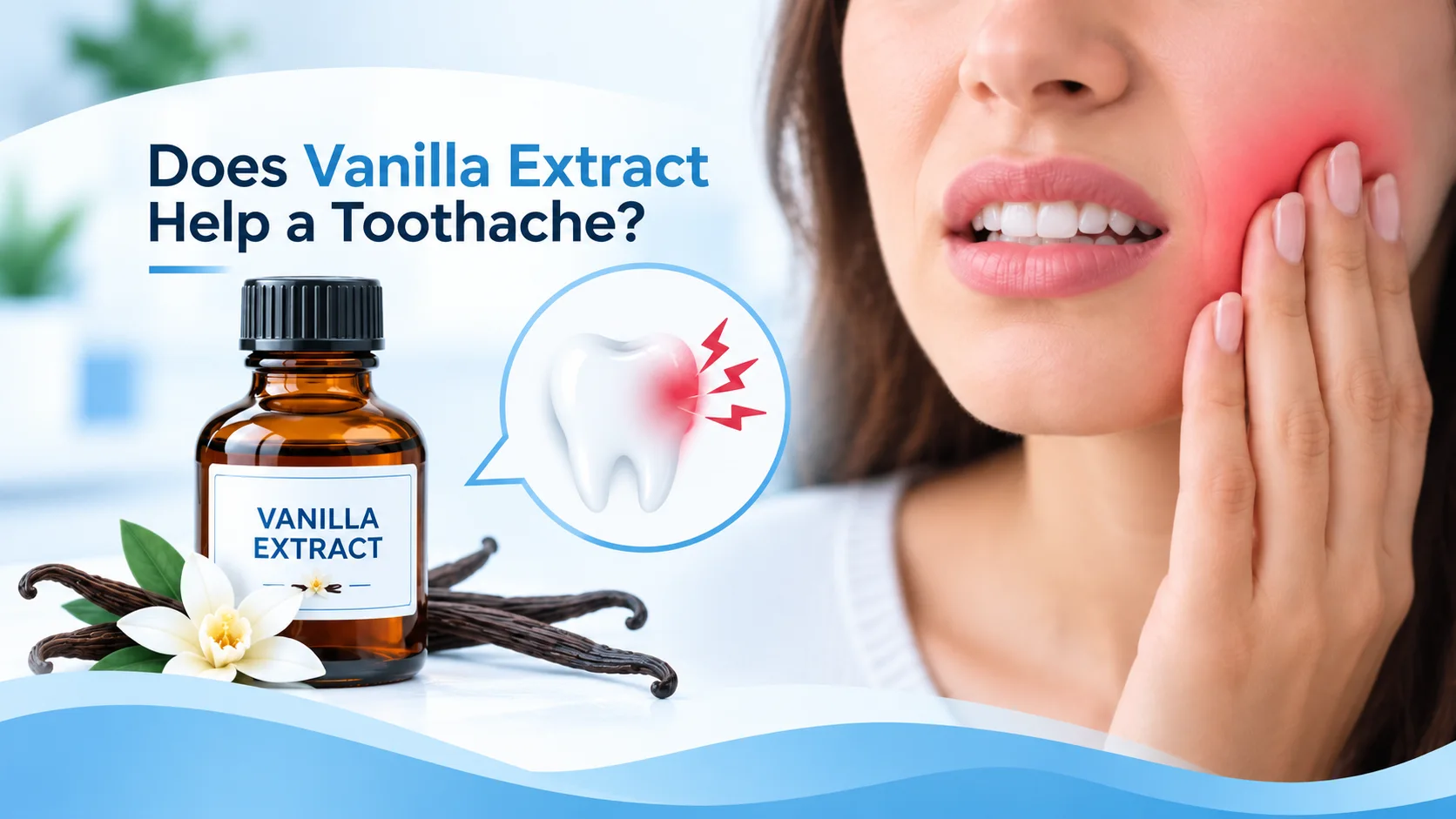
A throbbing toothache can wreck your evening, and the kitchen is the first place many people look for relief. One popular home remedy is dabbing vanilla extract on the sore tooth.
But does vanilla extract help a toothache?
Probably not in any meaningful way. Some people report brief relief, but no reliable clinical evidence shows that it numbs tooth pain or treats the cause. It cannot fill a cavity, clear an infection, or repair a cracked tooth.
Below, you’ll find why people try it, the risks, how to manage pain tonight, and when to see a dentist.
Why Do People Use Vanilla Extract for Tooth Pain?
The remedy rests on two ingredients: alcohol and vanillin, the compound behind vanilla’s flavor and aroma. Neither has been shown to treat a toothache.
Alcohol Content
Pure vanilla extract sold in the United States contains at least 35% alcohol by volume. Some people believe the alcohol numbs the area. In practice, it mostly causes warmth, tingling, or stinging, which can feel like relief for a minute or two.
Alcohol also dries and irritates oral tissue, especially gums that are already inflamed. And unlike dental anesthetics, vanilla extract was never formulated or tested to control tooth pain.
Vanillin
Laboratory studies have explored vanillin’s antioxidant and antimicrobial properties. Results from a petri dish do not carry over to a human mouth. No clinical evidence shows that applying vanilla extract calms an inflamed nerve, clears bacteria from a tooth, or stops decay.
Does Vanilla Extract Help a Toothache? What the Evidence Says
No reliable clinical evidence supports vanilla extract for dental pain. People who feel better after trying it may be responding to something else:
- Changed sensation: alcohol’s warming or tingling can read as relief.
- Distraction: a new sensation can pull attention away from the ache.
- Natural fluctuation: toothaches often ease and flare on their own.
Even real relief would not mean the tooth is fixed. Toothaches can come from cavities, cracked teeth, gum disease, exposed roots, or infection, and a dentist near Glendale needs to diagnose the cause.
Is It Safe to Put Vanilla Extract on a Tooth?
Vanilla extract is a food product, not a dental treatment. A teaspoon in cookie batter is harmless. Holding concentrated, alcohol-based extract against sore gums is another matter: repeated use can cause burning, dryness, and more irritation. Some vanilla-flavored products also contain added sugar, which feeds the bacteria behind decay.
The bigger problem is what the remedy lets you ignore.
It Can Delay Treatment
Pain is a warning. If a home remedy quiets it, it’s easy to put off the dentist. Decay that a simple filling could have handled can reach the nerve and call for a root canal instead.
It Can Hide an Infection
A dental infection can cause throbbing pain, swelling, tenderness, or a bad taste in the mouth. Pain may dip while the infection carries on. If left untreated, it can spread to surrounding tissue and become serious.
What Can You Do for Toothache Relief at Home?
These steps ease discomfort while you arrange dental care. They do not treat the cause.
Rinse With Warm Saltwater
Stir half a teaspoon of salt into a glass of warm water, swish gently, and spit it out. The rinse loosens food particles and soothes irritated tissue. Make sure the water is warm, not hot, and don’t swallow it.
Apply a Cold Compress
If the toothache comes with swelling or follows a minor injury, wrap a cold pack in a thin towel and hold it against your cheek for 10 to 15 minutes at a time. Keep ice off your gums and bare skin.
Take an Over-the-Counter Pain Reliever
Ibuprofen or acetaminophen can manage short-term dental pain, and ibuprofen also reduces inflammation. Follow the label. Ibuprofen is not suitable for everyone, including some people with kidney disease or stomach ulcers and those on certain medications. If you are pregnant or unsure, ask a pharmacist or doctor.
Never place aspirin or crushed tablets directly on your tooth or gums. It burns the tissue.
Keep Your Head Elevated
Tooth pain often feels worse when you lie flat. Propping your head up with an extra pillow can ease the throbbing and help you sleep.
Be Careful With Clove Oil
Clove oil contains eugenol, a compound used in some dental materials for its soothing effect. Concentrated clove oil can burn gums, so skip homemade mixtures. If you want a eugenol product, ask a dentist or pharmacist which one suits you and follow its directions.
When Should You See a Dentist for Tooth Pain?
Book an appointment if a toothache lasts more than a day or two, keeps returning, or gets worse. Call promptly if you notice:
- Lingering sensitivity to hot or cold
- Pain when biting or chewing
- Swollen or tender gums
- A cracked, chipped, or broken tooth
- A bad taste or discharge near a tooth
- Pain that disrupts sleep or daily activities
Warning Signs That Require Emergency Care
Some symptoms point to a spreading infection or another serious problem. Go to an emergency room immediately if you have:
- Difficulty breathing or swallowing
- Swelling under the tongue or in the neck
- Facial swelling that is spreading quickly
- Severe swelling with fever or a feeling of being seriously unwell
- Uncontrolled bleeding or a serious facial injury
Do not rely on home remedies in any of these situations.
What Will a Dentist Do for a Toothache?
Your Glendale dental care provider will ask about your symptoms, examine your teeth and gums, and take X-rays if needed to find problems the exam can’t show. Treatment depends on the cause:
| Cause of toothache | Possible treatment |
| Tooth decay | Filling or crown, depending on the damage |
| Inflamed or infected pulp | Root canal treatment or extraction |
| Dental abscess | Drainage and treatment of the source; antibiotics when indicated |
| Cracked tooth | Bonding, crown, root canal, or extraction, depending on severity |
| Gum disease | Professional periodontal treatment and ongoing maintenance |
| Loose or damaged filling | Repair or replacement |
When you call, describe any swelling, fever, or severe pain so the team can decide how soon you should be seen.
Can a Toothache Go Away Without Treatment?
Sometimes. Pain from temporary irritation can fade on its own. But in some cases, pain may decrease when the tooth’s pulp becomes severely damaged or dies, even though the underlying problem remains and the decay or infection continues. If your pain was severe, lasted several days, or came with swelling, get an exam even after it improves.
The Bottom Line
So, does vanilla extract help a toothache? No reliable clinical evidence shows it does. It may feel warm or tingly for a moment, but it does not treat cavities, infections, or cracked teeth, and the alcohol can irritate your gums.
For tonight, use a saltwater rinse, a cold compress, or an over-the-counter pain reliever if it suits you. Then schedule a dental visit to find the cause. Early care usually means simpler, less expensive treatment.