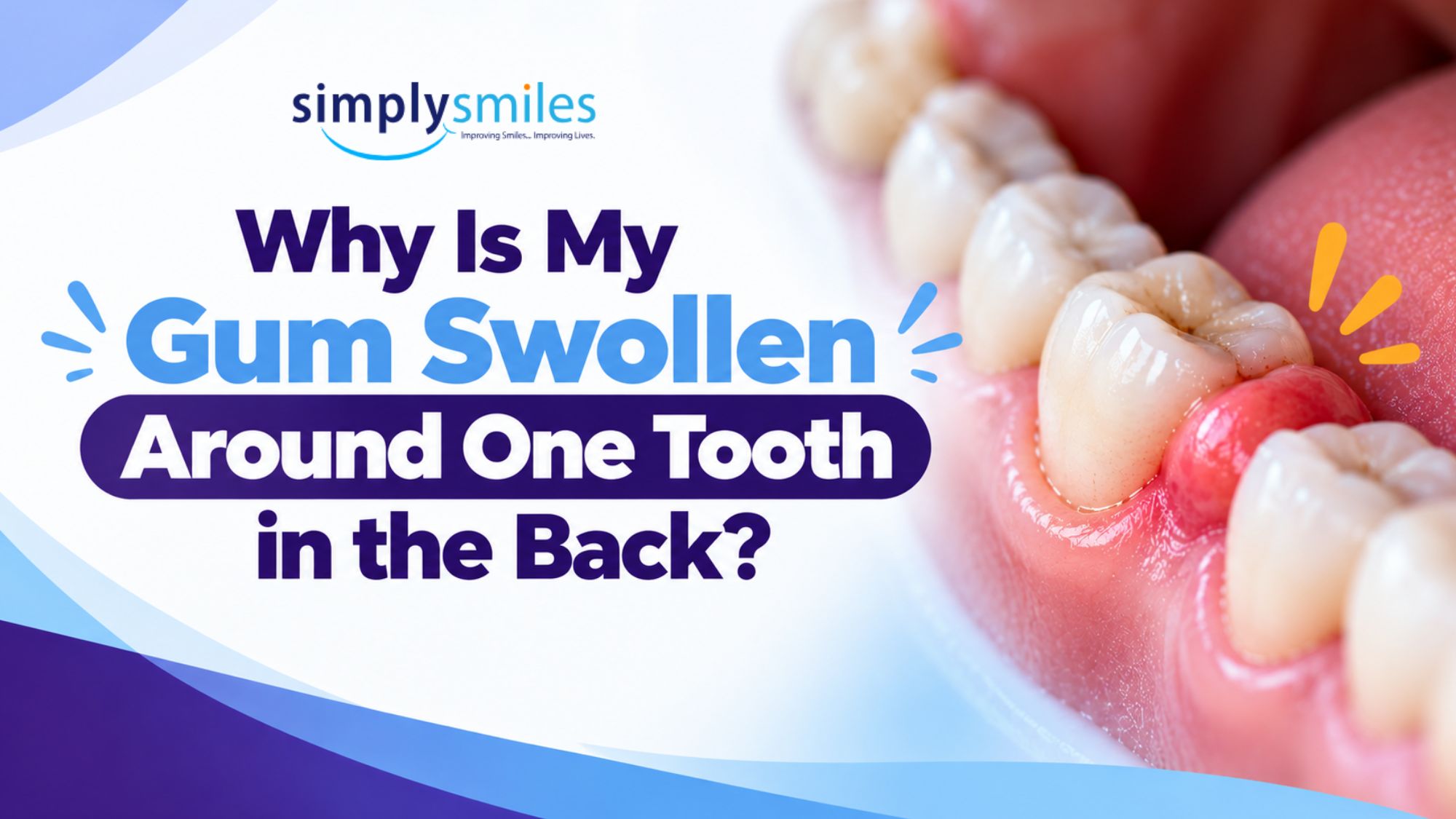
You’re brushing at night and notice it: one spot in the back of your mouth is puffy, tender, and maybe a little red. The rest of your gums feel fine. So why just one tooth?
When swelling shows up around a single back tooth, something is usually going on locally. It might be a bit of food stuck below the gumline. It might also be an early infection that needs a dentist’s attention. The good news is that most causes are very treatable, especially when caught early.
Here’s how to tell what might be happening, what you can safely do at home, and when it’s time to call.
Quick Answer
Swelling around a back tooth is most often caused by trapped food or plaque, a partly erupted wisdom tooth (pericoronitis), a gum abscess, or an infection coming from inside the tooth. Mild irritation may settle within a day or two with gentle cleaning and warm saltwater rinses. If swelling lasts longer than 2 to 3 days, keeps coming back, or comes with pain, a bump, pus, or fever, see a dentist in Glendale.
Why Is the Swelling Only Around One Tooth?
Widespread gum swelling usually points to a whole-mouth issue such as gingivitis. Swelling around one tooth tells a different story: the problem is probably tied to that specific tooth or the gum right beside it.
Back teeth are the usual suspects for a few reasons:
- They Do the Heavy Chewing: Molars handle the most force and trap the most food.
- They’re Hard to Clean: It’s difficult to reach the back of your mouth with a brush or floss, so plaque builds up unnoticed.
- They Have Deep Grooves and Tight Contacts: Food and bacteria hide in places a toothbrush can’t reach.
- Wisdom Teeth Often Struggle to Erupt: They’re the last teeth to come in, and many don’t have enough room to come in.
8 Common Causes of a Swollen Gum Around One Back Tooth
1. Food or Debris Trapped Below the Gumline
Popcorn hulls, seeds, meat fibers, and bits of chips can wedge between molars or slip under the gum. Your body reacts to the irritation with swelling, redness, and tenderness. This is one of the most common and easiest causes to fix.
2. Plaque and Tartar Buildup (Localized Gum Inflammation)
Plaque that isn’t removed hardens into tartar, which you can’t remove with brushing alone. Bacteria in that buildup inflame the gum next to the tooth. You may notice bleeding when you brush, bad breath, or a gum that looks darker red than the rest.
3. Pericoronitis (Wisdom Tooth Problems)
If a wisdom tooth is only partly through the gum, a small flap of tissue can cover part of it. Food and bacteria collect under that flap, causing pain, swelling, a bad taste, and sometimes difficulty opening your mouth fully. It’s most common in the late teens and twenties, but it can happen later too.
4. Periodontal (Gum) Abscess
This is a pocket of pus that forms in the gum, often next to a tooth with advanced gum disease or a deep pocket where debris has become trapped. It typically appears as a tender, shiny swelling that may throb or drain a salty or bitter fluid.
5. Tooth Infection (Periapical Abscess)
When decay or a crack reaches the nerve inside a tooth, bacteria can infect the tissue around the root tip. This often results in a swollen bump on the gum near the root, along with pain when you bite or lingering sensitivity to hot and cold. Sometimes the pain suddenly stops, but that doesn’t mean it’s healed. It can mean the nerve has died and the tooth infection is still there.
6. Deep Cavity, Cracked Tooth, or Failing Dental Work
A cavity under the gumline, a cracked molar, or a crown or filling with a rough or overhanging edge can irritate the gum and trap bacteria. If you’ve had dental work on that tooth, mention it when you call.
7. Brushing or Flossing Injury
Aggressive brushing, a hard-bristled toothbrush, or snapping floss into the gum can cause a small wound that swells. This usually improves within a few days once you switch to gentle technique.
8. A Foreign Object Stuck in the Gum
Pieces of a toothpick, a loose toothbrush bristle, or a sharp bit of food can lodge in the gum and cause a localized reaction. If you suspect something is stuck and rinsing doesn’t dislodge it, don’t dig for it. Let your dentist remove it safely.
How to Tell What Might Be Causing It
Only a dental exam can confirm the cause, but your symptoms can offer clues.
| What you notice | What it may point to |
| Soreness and puffiness after a meal, with relief after flossing | Trapped food |
| Swollen flap over a back tooth that’s not fully erupted, bad taste | Pericoronitis |
| Tender, shiny swelling on the side of the gum, may drain | Gum (periodontal) abscess |
| Pimple-like bump near the root, pain when biting, hot/cold sensitivity | Tooth (periapical) abscess |
| Redness and bleeding along the gumline, bad breath | Localized plaque buildup or gum disease |
Treat this chart as a guide only. Different problems can look alike, and some need X-rays to diagnose.
Other Symptoms to Watch For
Along with swelling, pay attention to:
- Throbbing or Pain When Chewing: Pain that flares up when you bite down can mean the tissue around the root is inflamed or infected.
- A Bad Taste or Persistent Bad Breath: This often signals trapped bacteria or a draining infection.
- Pus or Fluid: Any discharge you can see or taste can signal an infection and should be checked.
- A Raised, Pimple-Like Bump: A bump on the gum often points to an abscess, even if it doesn’t hurt much.
- Bleeding When You Brush or Floss: Gums that bleed in one spot usually mean plaque or tartar is irritating that area.
- A Tooth That Feels Loose or “High”: If the tooth feels different when you bite, the tissue or bone supporting it may be affected.
- Swelling in Your Cheek or Jaw: Swelling beyond the gum may mean the infection is spreading and needs prompt care.
- Fever or Swollen Glands Under the Jaw: These are signs your body is fighting a more significant infection.
What You Can Do at Home for Temporary Relief
If your symptoms are mild and just started, these steps can calm things down:
- Rinse With Warm Salt Water: Mix ½ teaspoon of salt in 8 ounces of warm water. Swish gently for 30 seconds and spit. Repeat a few times a day, especially after meals.
- Clean the Area Gently: Use a soft-bristled brush and floss slowly around the tooth, or try a water flosser on a low setting to flush out debris.
- Take an Over-the-Counter Pain Reliever if Appropriate: Ibuprofen or acetaminophen can help with discomfort when used as directed on the label. Check with your doctor or pharmacist if you have health conditions or take other medications.
- Use a Cold Compress: If your cheek is a little puffy, hold a cold pack on the outside of your face for 10 minutes at a time.
- Go Easy on Irritating Foods: Avoid very hot, spicy, crunchy, or sharp foods on that side for a few days.
Home care can ease symptoms, but it cannot cure a cavity, an abscess, or an infected tooth. If you don’t see clear improvement in 2 to 3 days, make an appointment.
What NOT to Do
- Don’t Pop or Squeeze a Bump: You can push bacteria deeper into the gum and bone, worsening the infection.
- Don’t Put Aspirin on Your Gum: Aspirin is acidic and can burn the delicate tissue.
- Don’t Dig at the Gum: Pins, needles, and toothpicks can injure the tissue and push bacteria deeper.
- Don’t Rely on Painkillers to “Wait It Out”: If pain keeps returning, the cause is still there.
- Don’t Delay Because the Pain Goes Away: An abscess can be pain-free but still active.
When Should You See a Dentist?
Book a visit soon if:
- Swelling Lasts More Than 2 to 3 Days: Mild irritation should start improving quickly, so lingering swelling needs an exam.
- The Area Keeps Coming Back: Repeated flare-ups in the same spot usually mean the underlying cause hasn’t been treated.
- You Notice Pus, a Bump, a Bad Taste, or Bleeding: These are common signs of infection.
- Pain Is Getting Worse: Pain that increases or makes chewing difficult shouldn’t be ignored.
- The swollen area is getting bigger: A growing area can mean the problem is spreading.
- There’s a Sore or Lump That Hasn’t Healed in About Two Weeks: This should always be checked, even if it doesn’t hurt.
Get urgent care right away if you have:
- Swelling Spreading Into Your Cheek, Jaw, Eye Area, or Neck: This can mean the infection is moving beyond the tooth.
- Fever or Chills: These are signs your body is reacting to a spreading infection.
- Trouble Opening Your Mouth: Stiffness in the jaw muscles can come from deeper inflammation.
- Difficulty Swallowing: This needs prompt attention.
Go to the nearest emergency room or call 911 if you have trouble breathing or swallowing. A dental infection that spreads can become serious.
What to Expect at Your Visit
Knowing what happens can take away a lot of the worry. At Simply Smiles in Glendale, Dr. Juan Valencia and our team will typically:
- Ask About Your Symptoms: We’ll want to know when it started, what makes it better or worse, and any past dental work on that tooth.
- Examine the Area: We’ll check the gum, the pockets around the tooth, and how the tooth responds to touch and temperature.
- Take X-Rays: These show decay, bone changes, and root infections that can’t be seen from the surface.
- Explain What’s Going On and Your Options: You’ll know what we found and what your choices are before any treatment begins.
Depending on the cause, treatment may include:
- A Professional Cleaning: This removes plaque and tartar and clears out trapped debris.
- Cleaning Below the Gumline: This is used if gum disease is part of the problem.
- Draining an Abscess: We drain the infection and treat its source so it doesn’t return.
- A Filling or Crown: These repair the tooth if decay or damage is the cause.
- Root Canal Therapy: If the nerve is infected, a root canal can often save the tooth.
- Removal of a Problem Wisdom Tooth: This may be recommended if the tooth keeps causing infections.
- Antibiotics: These are used when your dentist determines they’re needed. They aren’t always the answer, and they don’t replace treating the actual cause.
How to Prevent Swelling Around Back Teeth
- Brush Twice a Day: Use fluoride toothpaste for two minutes, paying extra attention to the back molars.
- Clean Between Your Teeth Daily: Floss or use a water flosser to remove plaque and food that a toothbrush can’t reach.
- Use a Soft-Bristled Brush: Gentle pressure cleans effectively without injuring your gums.
- Avoid Chewing Hard Objects: Ice, hard candy, and pen caps can crack teeth and lead to problems below the gumline.
- Treat Cavities Early: Fixing a cavity before it reaches the nerve is simpler and far less costly than treating an infection.
- Keep Up With Cleanings and Exams: Small problems are much easier to fix than big ones.
- Have Wisdom Teeth Evaluated: If they’re coming in at an angle or only partly erupted, it’s worth getting them checked before trouble starts.
Swollen Gum? Simply Smiles Can See You Fast
Swelling around one tooth is your mouth’s way of saying something needs attention. Sometimes it’s minor and clears up quickly. Sometimes it’s an early sign of an infection that’s much easier to treat now than later.
If you’re in Glendale, Arrowhead Ranch, Peoria, Sun City, or nearby areas, Simply Smiles offers same-day emergency dental care for painful or swollen gums. New patients can take advantage of our $69 New Patient Special, which includes an initial consultation and X-rays (cannot be combined with insurance).
📞 Call Simply Smiles at (623) 352-8336 or book your appointment online.
📍 7170 W Camino San Xavier, Suite A101, Glendale, AZ 85308
🕗 Monday to Friday, 8:00 AM – 5:00 PM
Frequently Asked Questions
Can a swollen gum around one tooth go away on its own?
Sometimes. If it’s from trapped food or minor irritation, it may settle within a day or two after gentle cleaning and saltwater rinses. If it’s caused by an infection, deep decay, or gum disease, it usually won’t fully resolve without dental treatment, even if the pain temporarily eases.
How do I know if my swollen gum is an abscess?
An abscess often looks like a tender, pimple-like bump on the gum and may throb. You might taste something salty or bitter if it drains, and you may have swelling, a fever, or pain when you bite. Because it’s hard to tell for sure at home, a dentist should examine any bump on your gum.
Why is my gum swollen near my wisdom tooth?
If a wisdom tooth is only partly erupted, a flap of gum can trap food and bacteria beneath it, causing pericoronitis. It can often be managed with cleaning and rinses, but repeated flare-ups mean you should ask your dentist about removal.
Why does my swollen gum hurt when I bite down?
Pain when biting can mean inflammation or infection has reached the tissue around the tooth root. It can also mean a cracked tooth or something stuck between your teeth. Either way, it’s worth having a dentist look at it.
Is a swollen gum a dental emergency?
It can be. Facial swelling, fever, trouble swallowing, or trouble opening your mouth need urgent care. If you have trouble breathing, go to the ER. Even without these signs, see a swollen gum with significant pain or a bump quickly.
Is it okay to wait a few days to see if it improves?
If it’s very mild and improving each day, a short wait with good home care is reasonable. If there’s no improvement after 2 to 3 days, or it’s getting worse, don’t wait.
This article is for general information only and isn’t a substitute for a professional exam, diagnosis, or treatment. If you’re unsure about your symptoms, contact a dentist.