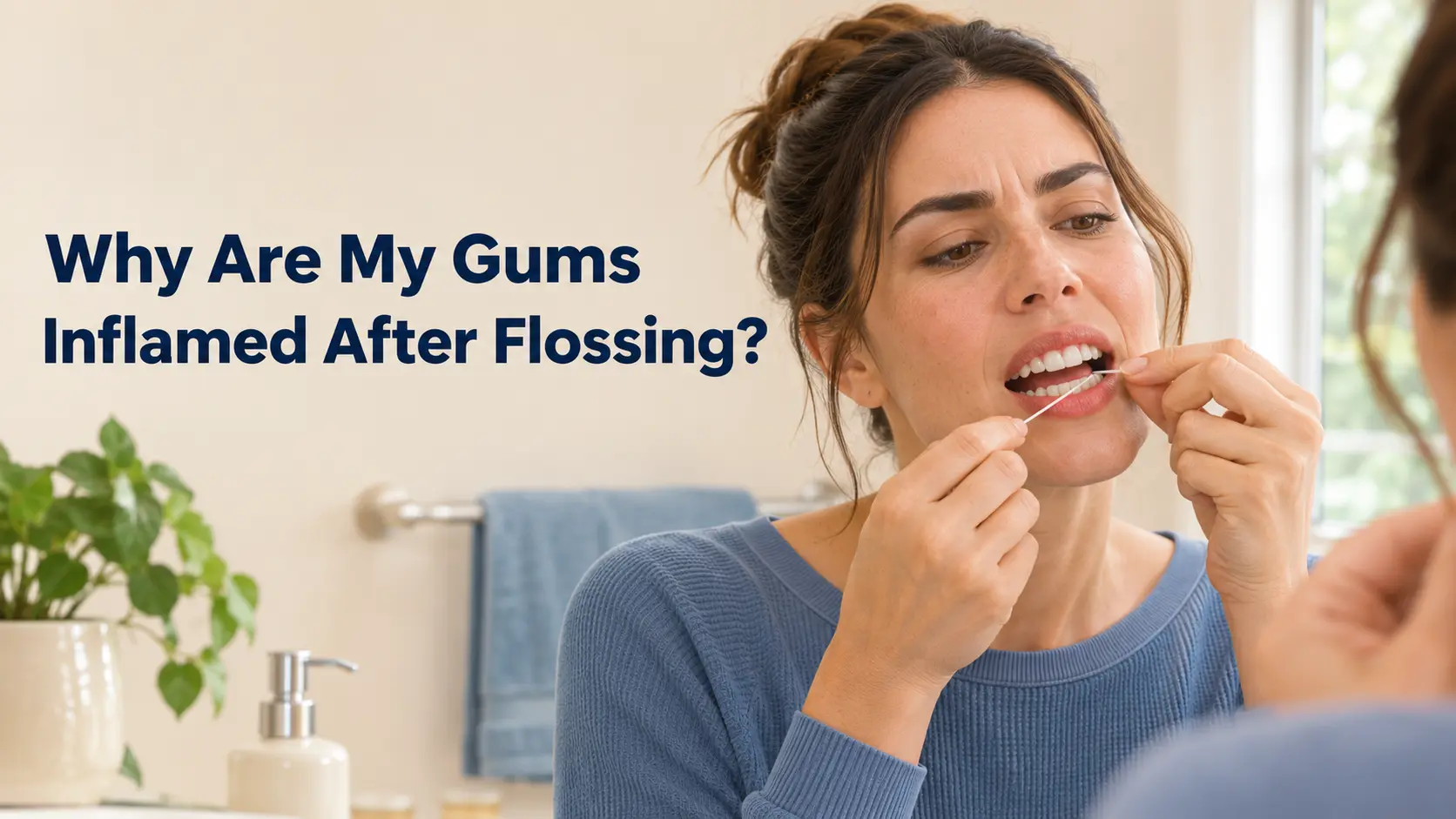
If your gums are swollen, sore, or red after you floss, it is normal to wonder if the floss actually caused the damage. Because flossing can damage soft tissue, gums can become inflamed afterwards, especially if the technique is too aggressive. However, flossing will show that the gum inflammation has already occurred and didn’t actually cause it. As plaque accumulates around your gum line, the gum tissue becomes sensitive, red, and bleeds easily when touched.
A little pain is normal when you start a new flossing routine, but if the inflammation gets worse or is already severe, it should not be considered a normal consequence of flossing.
Two Common Reasons Gums Feel Sore After Flossing
When you notice gums inflamed after flossing, your mind usually jumps to two conclusions: either you did it wrong or you have a dental problem. Dental professionals generally trace this symptom back to two primary causes: mechanical trauma or pre-existing plaque inflammation. Distinguishing between the two helps you address the issue safely.
1. Existing Inflammation (Flossing Exposed It)
Plaque constantly builds up in the tight spaces between your teeth where your toothbrush cannot reach. The bacteria living in plaque release weak toxins that irritate your gums over time. This makes the tissue swollen and weakens the tiny blood vessels inside it. Your gums might look okay at a quick glance, but they are already inflamed underneath. When you slide floss between your teeth and disturb those trapped bacteria, the weak blood vessels break and bleed right away. In this case, the floss did not cause the disease; it just exposed the hidden inflammation.
2. Mechanical Irritation (Flossing Caused It)
If you force floss down too fast, it snaps hard into the soft wedge of gum between your teeth. This can cut, scrape, or bruise the tissue. In this case, the floss itself is directly causing your sore gums because of too much force.
Is It Normal for Gums to Bleed or Feel Sore When You Start Flossing?
If you are flossing for the first time in a while, mild soreness and light bleeding are very common. When you do not floss regularly, plaque collects and keeps your gums slightly inflamed. When you start flossing again, disturbing that built-up plaque can make your sensitive gums bleed.
- Bleeding is not proof that flossing is bad for you. It is just a sign that your body is reacting to trapped bacteria.
- Mild tenderness should improve over a few days as you keep cleaning away plaque and your gums heal.
As you clean between your teeth every day, plaque goes away, and your gums get stronger and healthier. However, bleeding shouldn’t last forever. If your gums still bleed after a couple of weeks of gentle daily cleaning, the plaque buildup might be too deep to fix with just a toothbrush and floss at home.
Are You Flossing Too Hard?
Flossing too hard is one of the most common reasons for sharp, localised gum pain. There is a big difference between cleaning a tooth and hurting your gums.
Signs You Are Flossing Too Aggressively
- Snapping the floss: Forcing the string between tight teeth so hard that it slams straight down into your gum line.
- Sudden sting in one area: Sudden pain in one area that is followed by a cut or sore spot in the gum.
- Sawing into the gum: Pulling the floss back and forth forcefully like a saw against the soft tissue at the bottom.
- Localised pain: Pain in one spot, not in your mouth.
How to Floss Gently Without Hurting Your Gums
Flossing isn’t about cutting your gums; it’s about cleaning between your teeth.
- Squeeze the floss between your teeth in a side-to-side motion, not down hard.
- Tie the string around one tooth in a “C” fashion.
- Slide the floss up and down the side of the tooth, just under the gums.
- Lift it over the gum line, and repeat with the adjacent tooth.
Should You Stop Flossing If Your Gums Are Inflamed?
No, don’t stop flossing because of sore or bleeding gums. Plaque will continue to build up between your teeth if you don’t floss. Inflammation can get worse with more plaque, which leads to more bacteria. This will only make your next cleaning more painful and more likely to cause bleeding.
What to Do Instead of Quitting
- Use good technique: Do not use force; move slowly around each tooth.
- Protect cuts: If the gum has been cut from snapping the floss, wash around the cut for 1-2 days to help it heal.
- Follow your regular routine: Floss the rest of your mouth daily to prevent plaque buildup.
- Ask for help: If plaque has hardened into tartar, you can book a teeth cleaning in Glendale to have it removed.
Once you’re comfortable with gentle flossing, consider other daily habits that can help prevent gum disease.
When Inflamed Gums After Flossing May Mean Something Else
Sore gums after flossing may not be due to poor flossing technique or just a few days without flossing. However, when inflammation persists, it may be a sign of a larger issue:
- Gingivitis: An early stage of gum disease that causes gums to become red, swollen, and prone to bleeding.
- Gum Disease: A more severe, deeper gum infection that can lead to loss of gum tissue and bone around the teeth.
- Trapped Food: Hard pieces of food, like a kernel of popcorn or a seed, that don’t go far enough out of the gum pocket when you floss and stay there.
- Bad Fillings or Crowns: Roughness around old fillings or crowns that rips pieces of the floss, causing continuous irritation.
When Should You See a Dentist?
As you improve your gum cleaning routine, gum soreness is a minor issue that should be resolved, but if it doesn’t, then you should visit a professional for a teeth cleaning check-up.
Call Your Dentist If:
- After 7-10 days of soft, regular flossing, gums continue to bleed.
- The swelling gets worse instead of better.
- Your gums bleed on their own when you are not flossing, like while eating soft food.
- You notice bad breath that will not go away, a bad taste in your mouth, or pus around a tooth.
- Your gumline is receding, or a tooth feels loose.
- One specific spot in your mouth always swells or bleeds every time you floss.
A dentist or hygienist can look at your mouth and tell you whether the problem is your flossing technique, an infection like gingivitis, or something else. Professional cleanings remove hard tartar that your toothbrush and floss can’t remove at home, helping your gums become healthy and pain-free again. If your gums keep bleeding or swelling, schedule an exam at our Glendale dental office so we can identify the cause and recommend the right care.